For decades, central banks around the world primarily relied on paper assets such as U.S. Treasuries, foreign currencies, and government bonds to support their reserves. But something major has changed in recent years. Countries across the globe are now buying gold at one of the fastest rates in modern financial history.
The big question is, what do central banks see coming?
In this article, we’ll explore why central banks are buying gold at record levels, what risks they may be preparing for, and why many investors are beginning to mirror central bank strategies by adding physical gold and silver to their portfolios and retirement accounts.
You can either watch the video or continue reading the text below:
Central Banks Are Buying Gold at Historic Levels

According to the World Gold Council, central banks aggressively bought 244 tonnes of gold in Q1 2026, a 3% year-over-year increase that defied record-high prices. This buying wave signals a strategic, ongoing shift away from dollar-denominated reserves.
China, Poland, India, Kazakhstan, and many other nations have been aggressively increasing their gold reserves while reducing their dependence on paper currencies and debt-based financial assets. And many analysts believe this shift may be sending a powerful message about the future of the global economy.
The reality is simple: central banks typically move before the public realizes what is happening. They often position themselves years ahead of major economic transitions, financial crises, or currency instability.
That raises an important question for investors and retirement savers: If the institutions managing the global financial system are stockpiling physical gold, should ordinary investors be paying attention too?
Top Central Bank Gold Buyers
Central bank gold buying has surged dramatically over the past several years. According to data from the World Gold Council, official sector gold purchases have remained near record highs as governments continue diversifying away from traditional reserve assets.
Countries such as China and India have steadily increased their reserves, while Poland recently emerged as one of the largest official gold buyers in the world.
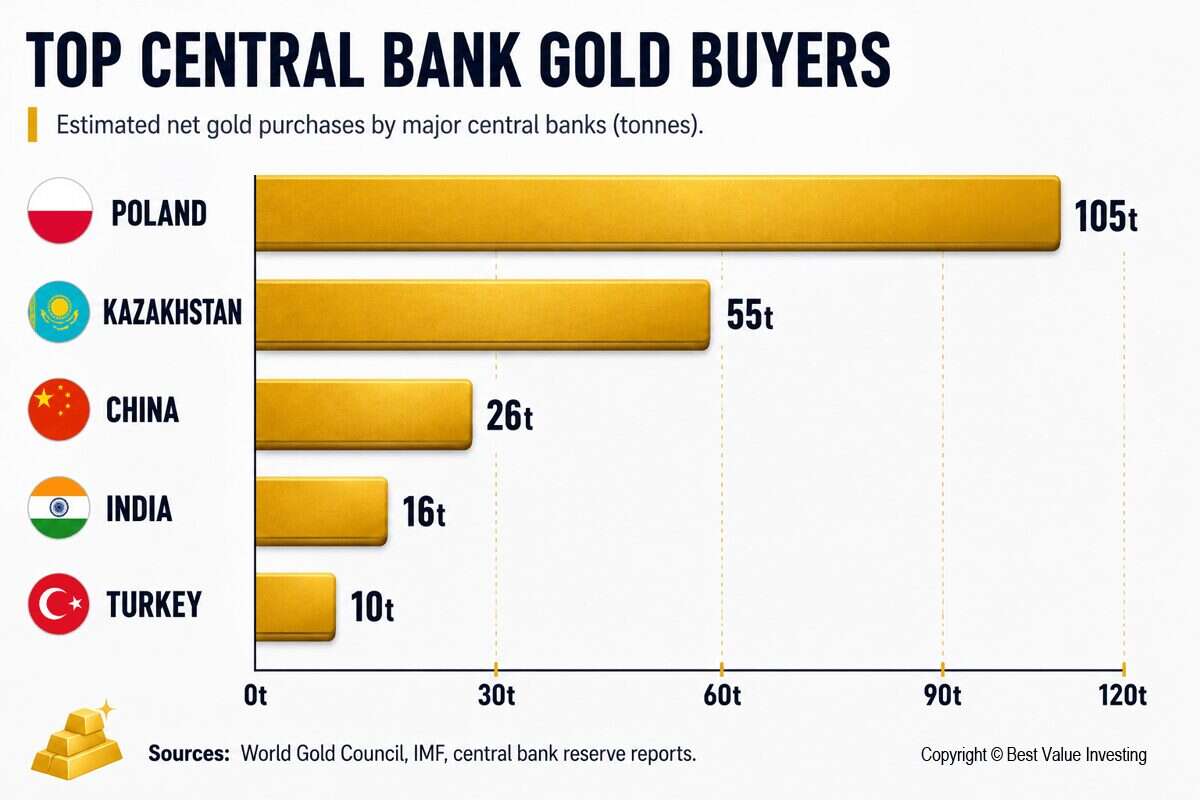
This is not small-scale retail investing. These are sovereign nations and financial institutions moving billions of dollars into physical gold reserves. Historically, central banks buy gold for several reasons:
- To diversify reserves away from paper currencies
- Reduce reliance on the U.S. dollar
- Protect against inflation and currency devaluation
- Strengthen confidence in their financial systems
- Hedge geopolitical and banking risks
- And to preserve long-term purchasing power
Gold has played a monetary role for thousands of years because it is tangible, globally recognized, and cannot be printed by governments. Unlike fiat currencies, physical gold has a limited supply. That scarcity is one of the key reasons central banks continue accumulating it during times of economic uncertainty.
And that uncertainty appears to be growing rapidly around the world. As central bank purchases continue climbing, many analysts believe these institutions may be preparing for larger structural problems within the global financial system.
If you’re ready to take action 👉 request this FREE Gold & Silver Guide and learn more about adding gold to your retirement savings account!

Why Central Banks Are Concerned About the Global Economy
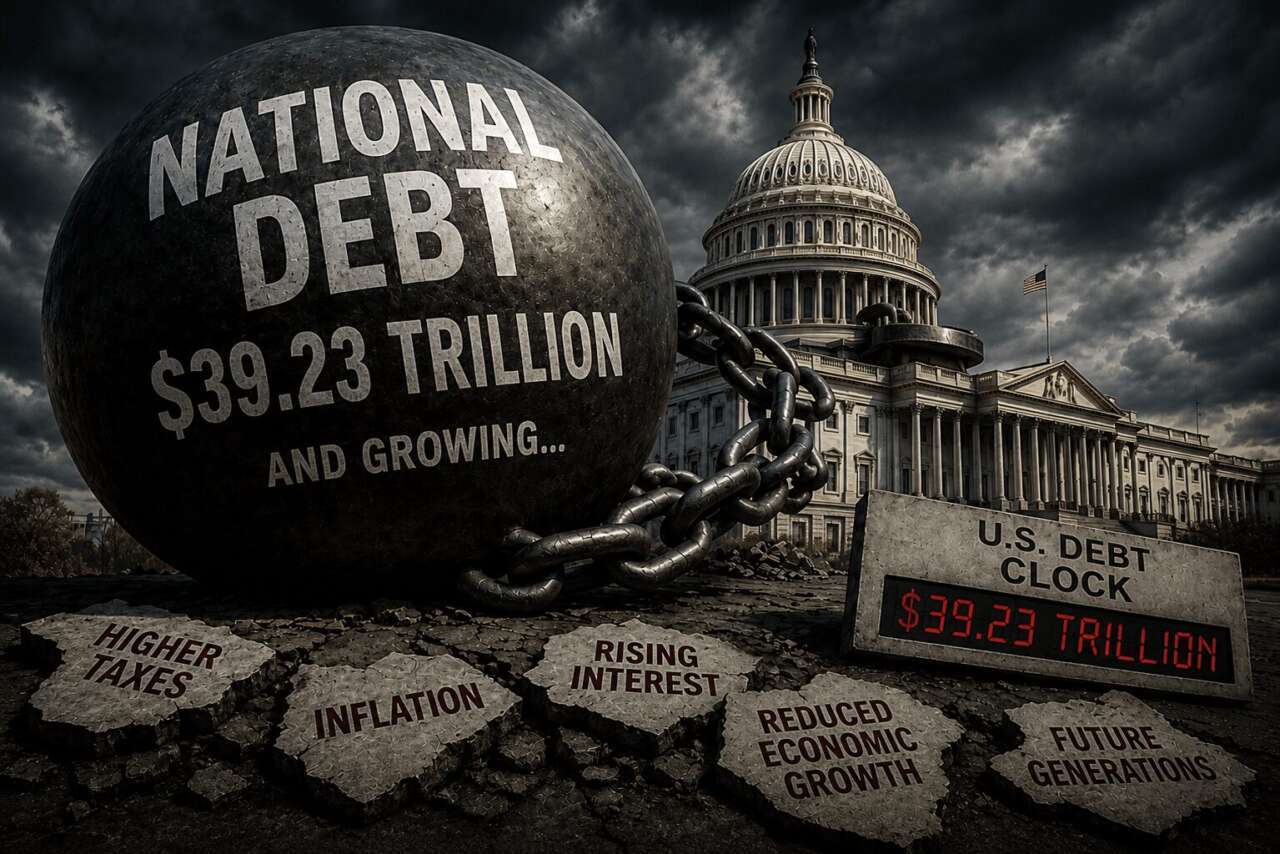
The world economy is facing a combination of challenges rarely seen at the same time in modern history. Global debt levels have exploded to unprecedented highs of over $39 trillion. Governments continue borrowing trillions of dollars while interest payments on that debt continue rising.
At the same time, inflation remains elevated in many parts of the world despite aggressive central bank policies aimed at controlling prices. Banking instability has also become a growing concern following regional banking collapses, rising commercial real estate risks, and mounting pressure on heavily leveraged financial institutions.
Meanwhile, geopolitical tensions between major global powers continue intensifying. Wars, sanctions, trade disputes, and growing fragmentation of the global financial system are pushing many countries to reduce their dependence on the U.S. dollar and Western banking networks.
This process is often referred to as “de-dollarization.” Instead of relying entirely on dollar reserves, many countries are increasingly turning to gold as a neutral reserve asset outside the traditional banking system.
Gold carries no counterparty risk. It cannot default. It cannot be digitally erased. And it cannot be created out of thin air like fiat currencies.
For central banks, these characteristics make gold highly attractive during uncertain times. And while governments and financial institutions may not openly discuss worst-case scenarios, their actions often reveal what they are preparing for behind the scenes.
That growing concern is one reason many investors are now paying closer attention to precious metals.
Gold Has Historically Protected Wealth During Financial Uncertainty
Throughout history, gold has repeatedly served as a store of value during periods of inflation, recession, war, banking crises, and currency devaluation. When paper assets lose purchasing power, investors frequently move toward tangible assets that historically retain value over long periods of time.
Gold has survived every major financial crisis in modern history. Unlike stocks or bonds, gold does not rely on a company’s earnings or a government’s ability to repay debt. Its value is based largely on scarcity, global demand, and investor confidence.
That is why gold often performs well during periods of fear and uncertainty. In recent years, investors have increasingly turned to gold as concerns over inflation, national debt, central bank money printing, and banking system stability continue to grow.
Silver Prices Are Also Surging
Silver has also benefited from many of the same trends. In addition to being viewed as a monetary metal, silver plays a major role in industrial sectors such as:
• Artificial intelligence infrastructure
• Semiconductors and electronics
• Solar panels and renewable energy
• Electric vehicles
• Telecommunications and 5G networks
• Advanced medical technologies
This combination of monetary demand and industrial demand has led many analysts to remain bullish on silver’s long-term outlook. For an in-depth silver price forecast, check out our article: Silver Price Prediction 2026: Why Analysts Expect Higher Prices Ahead.
As investors search for ways to preserve purchasing power outside the traditional financial system, physical precious metals continue attracting growing interest.
The Gold Standard of Security
 Despite no longer being tied to fiat currencies, gold continues to be prized by central banks around the world for its historic and intrinsic value. In times of economic uncertainty, gold is seen as a safe haven.
It’s a store of value that can effectively hedge against inflation and currency depreciation. Unlike paper assets or digital entries, the physical gold held by central banks is immune to hacking and technological risks, making it a highly secure asset.
Diversification and Stability
For central banks, holding gold is an essential strategy for diversifying reserves. In contrast to holding foreign currencies, which are subject to the fiscal and monetary policies of their country of origin, gold maintains independence.
It’s a form of insurance against geopolitical risks and fluctuations in the international markets. Thus, increasing gold reserves provides central banks with a stabilizing force that can be particularly reassuring to economies during periods of strain.
And for retirement savers, this trend has become especially important.
Why Retirement Savers Are Turning to Gold IRAs
Many Americans saving for retirement remain heavily concentrated in paper-based assets such as stocks, mutual funds, ETFs, and bonds.
While these investments can provide growth, they are also vulnerable to stock market crashes, inflation, banking instability, and currency devaluation. That is one reason some investors choose to diversify a portion of their retirement savings into physical precious metals.
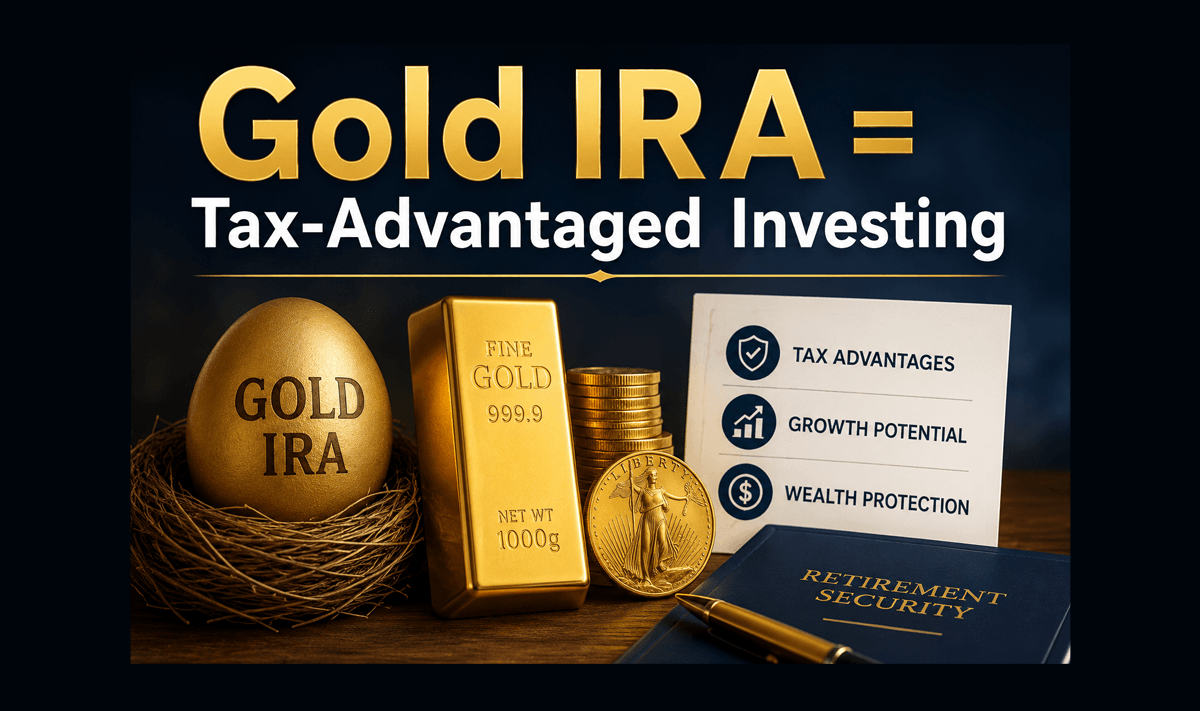
A Gold IRA allows eligible investors to hold physical gold and silver inside a tax-advantaged retirement account. These accounts provide many of the same potential tax benefits as traditional retirement accounts while allowing exposure to tangible assets stored in approved depositories.
Many retirement savers view Gold IRAs as a form of long-term financial insurance. Some of the most common reasons investors consider Gold IRAs include:
• Inflation protection
• Portfolio diversification
• Wealth preservation
• Reduced exposure to paper assets
• Safe-haven protection during financial instability
• And long-term purchasing power preservation
Physical gold and silver also provide something many investors value during uncertain times: direct ownership of tangible assets outside the banking system.
As central banks continue accumulating gold reserves, many retirement savers are beginning to ask whether they should adopt a similar defensive strategy. And for some investors, the answer may be yes.
Related:
- How to Start a Gold IRA in 3 Simple Steps
- How to Start a Silver IRA in 3 Simple Steps
- Gold IRA Guide: Protect Your Retirement Savings Crash Proof
Additionally, if you prefer digital assets, a few select companies are licensed to also include specific cryptocurrency investments in an IRA. For crypto IRA investments, we recommend BitIRA.
Should Investors Consider Mirroring Central Banks?
Central banks have access to enormous amounts of economic data, financial intelligence, and global market insight. When they begin buying gold at record levels year after year, many investors believe it is worth paying attention.
Of course, central banks and individual investors operate differently. But the underlying principle remains similar: Protecting purchasing power during uncertain times.
No one knows exactly how the global economy will evolve over the next decade. However, rising debt, inflation pressures, geopolitical instability, and growing concerns about fiat currencies are causing many investors to rethink traditional portfolio strategies.
That does not necessarily mean abandoning stocks or other investments entirely. Instead, many financial experts emphasize the importance of diversification.
By allocating a portion of savings toward physical gold and silver, some investors believe they can better protect themselves against risks that may impact traditional financial markets.
The key takeaway is simple:
Central banks are not buying gold because they expect everything to remain stable. They are buying gold because they recognize growing uncertainty within the global financial system. And increasingly, investors and retirement savers are beginning to follow their lead.
Learn more about why you should buy gold right now and how you can rollover or transfer funds from your existing retirement savings account in this video:
Or, if you’re ready to take action 👉 request this FREE Gold & Silver Guide and learn more about adding gold to your retirement savings account!
Final Thoughts: Financial Institutions Are Accumulating Gold for a Reason
The world’s most powerful financial institutions are accumulating gold at historic levels for a reason. Rising debt, inflation, geopolitical tensions, banking instability, and growing concerns about paper currencies are reshaping the global financial landscape.
Gold remains one of the few assets that have preserved wealth throughout centuries of economic uncertainty. That is why central banks continue treating it as a core reserve asset. And it is also why many investors and retirement savers are now considering physical gold and silver as part of a diversified long-term financial strategy.
While no investment is guaranteed, understanding why central banks are aggressively buying gold may help investors better prepare for an increasingly uncertain future.
Before you go…
With careful and extensive research, we have reviewed and rated the best precious metals IRA companies in the industry to help make your choice of precious metals provider easier. 👉 See our list of the top 8 precious metals IRA companies (cash sales also available)!