A federal retirement account can feel secure until inflation, market volatility, or a sharp decline in stocks exposes how much of your future depends on paper assets. A TSP to gold IRA transfer can give eligible federal employees and retirees a way to diversify a portion of those savings into physical precious metals held in a tax-advantaged retirement account.
The terminology matters. Moving money from the Thrift Savings Plan into an IRA is usually a rollover, even though many investors call it a transfer.
The safest approach is generally a direct rollover from the TSP to a self-directed Gold IRA custodian. Done correctly, the money does not pass through your personal bank account, and you can avoid unnecessary withholding, taxes, and timing problems.In this guide, we’ll share TSP to Gold IRA transfer rules for both Roth IRAs and direct rollovers to help you avoid tax penalties and other costly mistakes.
Let’s begin by taking a look at whether you can move TSP funds into a Gold IRA and the rules for doing so.
Can You Move TSP Funds Into a Gold or Precious Metals IRA?

Gold is not a replacement for every retirement asset. It does not produce dividends or interest, and its price can move sharply in either direction.
But for investors concerned about dollar purchasing power, federal debt, geopolitical instability, and stock-market concentration, physical bullion can serve as a long-term store of value outside the banking system. Gold cannot be printed out of thin air or devalued in an instant by monetary policy.
For more information about why gold can help you protect your retirement savings, watch this video about why countries like China, India, Poland, Turkey, and many others are rapidly increasing their gold reserves while global debt, inflation, banking instability, and concerns about the financial system continue to rise:
TSP to Gold IRA?
But can you move TSP funds into a gold IRA? The answer is yes, provided you are eligible to take a distribution from your TSP.
Most commonly, this happens after you separate from federal service or retire. Depending on your circumstances and TSP withdrawal rules, you may also have limited options while still employed, particularly once you reach the applicable retirement age.
You cannot move TSP fund shares directly into a Gold IRA. The TSP investments must first be liquidated as part of an eligible distribution.
The proceeds can then be sent to a self-directed IRA custodian, which purchases IRA-approved gold, silver, platinum, or palladium on your behalf.
A Gold IRA is not a personal safe full of coins. Federal rules require the IRA metals to be held by an approved custodian and stored at a qualified depository.
Taking personal possession of IRA gold can be treated as a distribution, potentially triggering income taxes and, if you are under age 59 1/2, an additional early-distribution penalty.
👉 Do as Ben Shapiro, and claim your FREE Gold & Silver Info Guide to learn how to protect your retirement savings!

TSP to Gold IRA Transfer: Traditional vs Roth Funds
Before initiating paperwork, identify whether the money in your TSP is traditional, Roth, or a combination of both. Matching the tax treatment of the account is usually the cleanest route.
Traditional Gold IRA
Traditional TSP funds are generally rolled into a traditional self-directed Gold IRA. This preserves tax deferral: you do not owe income tax simply because the money moved from the TSP to the IRA.
Taxes are generally due later when you take retirement distributions.
Roth Gold IRA
Roth TSP assets can generally be rolled into a Roth self-directed Gold IRA. Qualified Roth distributions can be tax-free, but Roth accounts have specific holding-period and eligibility rules.
A knowledgeable custodian can help organize the account correctly, though it is wise to confirm personal tax questions with a qualified tax professional.
You can also convert traditional TSP money to a Roth Gold IRA, but that is a taxable conversion. The amount converted is generally added to your taxable income for the year.
This may make sense for some investors who expect higher future tax rates, but it should be a deliberate tax decision rather than an accidental result of incorrect rollover instructions.
Why a Direct Rollover Is Usually the Better Choice
 There are two basic ways to move eligible retirement funds. A direct rollover sends the money from the TSP directly to the receiving IRA custodian. Additionally, an indirect rollover sends the distribution to you first, leaving you responsible for redepositing it into an IRA within 60 days.
A direct rollover is normally preferable because it reduces the number of moving parts. It also generally avoids the mandatory 20% federal withholding that can apply when an eligible retirement-plan distribution is paid directly to you.
If you receive an indirect distribution and want to roll over the entire balance, you may have to replace the withheld amount from your own funds before the 60-day deadline.
Missing that deadline can turn what was meant to be a retirement rollover into a taxable distribution. That can be an expensive mistake, especially for a retiree moving a substantial TSP balance.
Direct custodian-to-custodian handling offers more control and a clearer paper trail.
With that in mind, let’s take a look at how the TSP rollover works.
How the Rollover Process Works
The process is straightforward when the order of operations is right. Here’s the TSP to Gold IRA rollover process in a few simple steps:
✔️ Step 1. Start by opening a self-directed Gold IRA with a Gold IRA company or custodian that accepts TSP rollovers and supports physical precious metals.
The custodian provides the account details and rollover instructions needed for the TSP distribution request.
✔️ Step 2. Next, submit the applicable withdrawal or rollover request through the TSP process. Forms, withdrawal options, and processing procedures can change, so verify the current requirements directly with the TSP before submitting anything.
Specify that the payment should be sent as a direct rollover to your new IRA custodian, not made payable to you personally.
✔️ Step 3. Once the funds arrive, the IRA custodian records the cash in your account. You then instruct the custodian to purchase metals from a dealer.
✔️ Step 4. The metals are shipped to an approved depository in the name of your IRA, where they remain until you sell them, take a qualifying distribution, or move the account again.
The transfer itself may take days or several weeks depending on TSP processing, the custodian’s paperwork, and how promptly documents are completed.
Do not rush the bullion selection simply because the cash has arrived. The account structure, pricing, storage arrangement, and total costs deserve careful review.
👉 If you’re searching for the best company to help you with your rollover or transfer, request this FREE Gold IRA Checklist:

Related:
- 8 Gold IRA Scam Warning Signs Before You Buy
- 401(k) to Gold IRA Rollover Without Penalty: Rules and Steps
- Gold IRA Tax Rules: The Ultimate Gold IRA Tax Guide
What Gold Can a Gold IRA Hold?
Not every gold product qualifies for a retirement account. The IRS has purity standards and other requirements for IRA-approved precious metals.
In general, gold bullion must meet a minimum fineness of .995, with certain statutory exceptions. Popular IRA-eligible choices often include widely recognized bullion coins and bars that meet the applicable standards.
 In general, gold bullion must meet a minimum fineness of .995, with certain statutory exceptions.
 Collectible coins, rare numismatic coins, jewelry, and many proof or commemorative products may not be appropriate for an IRA.
They can carry large markups that are difficult to recover and may create eligibility concerns. For many retirement investors, lower-premium bullion with transparent pricing is a more disciplined fit than highly promoted collectible products.
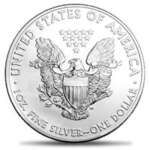 Silver can also be held in a precious metals IRA, and some investors use it alongside gold because of its industrial demand and lower price per ounce.
The trade-off is that silver requires more storage space for the same dollar value and can be more volatile. A balanced allocation should reflect your risk tolerance, timeline, and existing assets.
Related:
- IRS-Approved Gold Coins List for Gold IRAs: Avoid Expensive Mistakes
- Best Gold Coins to Invest in for 2026
Fees, Storage, and Provider Due Diligence
A Gold IRA has costs that a conventional TSP participant may not be used to seeing. These can include account setup fees, annual custodian fees, depository storage and insurance fees, and dealer spreads between buying and selling prices.
Some providers like Goldco and Augusta Precious Metals offer promotional fee coverage for qualifying accounts, but an offer should not replace a full cost comparison.
Ask whether storage is segregated or non-segregated, how the metals are insured, and where the depository is located.
Also ask for clear pricing before authorizing any purchase. A reputable provider should explain the difference between the metal’s market price, the product premium, and the buyback price without pressure or vague promises.
Reputation deserves equal attention. Review a company’s history, customer-service practices, complaint patterns, and independent profiles from organizations such as the Better Business Bureau, Business Consumer Alliance, TrustLink, and Trustpilot.
Ratings are useful signals, not guarantees. Read recent complaints to see how a company responds when paperwork, pricing, or delivery questions arise.
In this video, for example, you can learn about Goldco’s current offer of $0 IRA fees:
Common TSP to Gold IRA Rollover Mistakes to Avoid
The most damaging errors tend to be procedural rather than investment-related. Investors sometimes request a check payable to themselves when a direct rollover was available.
Others open the wrong type of IRA, mix Roth and traditional assets incorrectly, or buy metals that do not meet IRA requirements.
Another mistake is treating gold as an all-or-nothing bet. A TSP to Gold IRA rollover can support diversification, but moving every retirement dollar into one asset class introduces a different kind of concentration risk.
The appropriate allocation depends on your pension, Social Security, cash reserves, retirement income needs, and comfort with price fluctuations.
Finally, be wary of firms that encourage home storage or imply that IRA rules do not apply to their arrangement. A legitimate Gold IRA requires proper custody and depository storage.
Protecting retirement savings means following the rules before a problem occurs, not trying to explain an aggressive arrangement after the fact.
A careful TSP rollover is less about chasing a gold price forecast and more about building a retirement plan that is not dependent on a single currency, market, or financial institution.
Take time to compare custodians, understand every fee, and decide what portion of your savings should stand in physical assets designed for long-term wealth preservation.
👉 Do as Ben Shapiro, and claim your FREE Gold & Silver Info Guide to learn how to protect your retirement savings!
Gold IRA Companies for TSP Transfers
There are many options for gold IRA companies on the market, so which company should you choose?
To make your decision a bit easier, we’ve put together a list of the best precious metals and gold IRA companies in the industry, which we have carefully reviewed and vetted based on BBB/BCA ratings and complaints, customer reviews, annual fees, precious metals selection, storage options, promotions, and buy-back programs.
In other words, we have looked for patterns in complaints, especially around delayed communication, unexpected fees, or sales pressure for you.
You can feel safe taking help from any of these companies to set up a gold IRA or for regular precious metals purchases:
>
| Company | Reviews | Annual Fees | Investment Minimums (IRA) | Preferred Custodian | Free Gold Kit |
 |
 |
$180 | $10,000 | Equity Trust |  |
 |
 |
$180 | $25,000 | Entrust | |
 |
 |
$0 | $25,000 | Equity Trust | |
 |
|
$75-$300 | $10,000 | GoldStar Trust Company | |
 |
 |
$200 | $50,000 | Equity Trust | |
 |
 |
$250 | $20,000 | Equity Trust | |
 |
 |
$250 | $10,000 | Equity Trust | |
 |
 |
$48 | $0 | Various | |
TSP to Gold IRA Transfer Rules: FAQ
Can you move TSP funds into a Gold IRA?
Yes, you can move TSP funds into a Gold IRA provided you are eligible to take a distribution from your TSP. The money must first be liquidated as part of an eligible distribution and then sent to a self-directed IRA custodian to purchase IRA-approved precious metals for your account.
What is the difference between a direct rollover and an indirect rollover from the TSP to a Gold IRA?
A direct rollover sends the money from the TSP directly to the receiving IRA custodian, while an indirect rollover pays the distribution to you first and you must redeposit it into an IRA within 60 days. A direct rollover is normally preferable because it reduces moving parts and avoids mandatory 20% federal withholding in many cases.
Should I roll over traditional TSP funds or Roth TSP funds into a Gold IRA, and how does that affect taxes?
Traditional TSP funds are generally rolled into a traditional self-directed Gold IRA to preserve tax deferral, with taxes due later on retirement distributions. Roth TSP assets can be rolled into a Roth self-directed Gold IRA, where qualified Roth distributions can be tax-free but holding-period and eligibility rules apply. You can also convert traditional TSP money to a Roth Gold IRA, but that is a taxable conversion.
What does a Gold IRA hold and what are the IRS requirements?
A Gold IRA can hold IRA-approved precious metals such as gold bullion meeting minimum fineness standards (typically .995) and other IRS-approved metals, while collectible coins or jewelry may not be appropriate for an IRA. The metals must be held by an approved custodian and stored at a qualified depository.
What should I consider when evaluating fees, storage, and provider due diligence for a Gold IRA?
Consider account setup fees, annual custodian fees, depository storage and insurance fees, and dealer spreads. Ask whether storage is segregated or non-segregated, how metals are insured, and where the depository is located. Also seek clear pricing for market price, product premium, and buyback price, and review a provider’s reputation and customer-service practices before proceeding.