A search for Goldco IRS approved metal usually begins with a sensible concern: you want physical precious metals in a retirement account, but you do not want an attractive coin or bar rejected after you move your savings. That concern is justified.
A Precious Metals IRA is not a place to buy any gold or silver product you like. Federal rules set standards for metal purity, product type, custody, and storage. Goldco can help customers explore eligible bullion choices through a self-directed IRA process, but no dealer changes the underlying rules.Your protection comes from understanding what the IRS generally permits before authorizing a purchase, especially when retirement dollars and long-term family wealth are at stake.
In this article, we’ll explain what Goldco IRS approved metal/s mean, and everything you need to know about adding physical gold, silver, palladium, and platinum in an IRA.
Let’s dive in!
What Does Goldco IRS Approved Metal Really Mean?
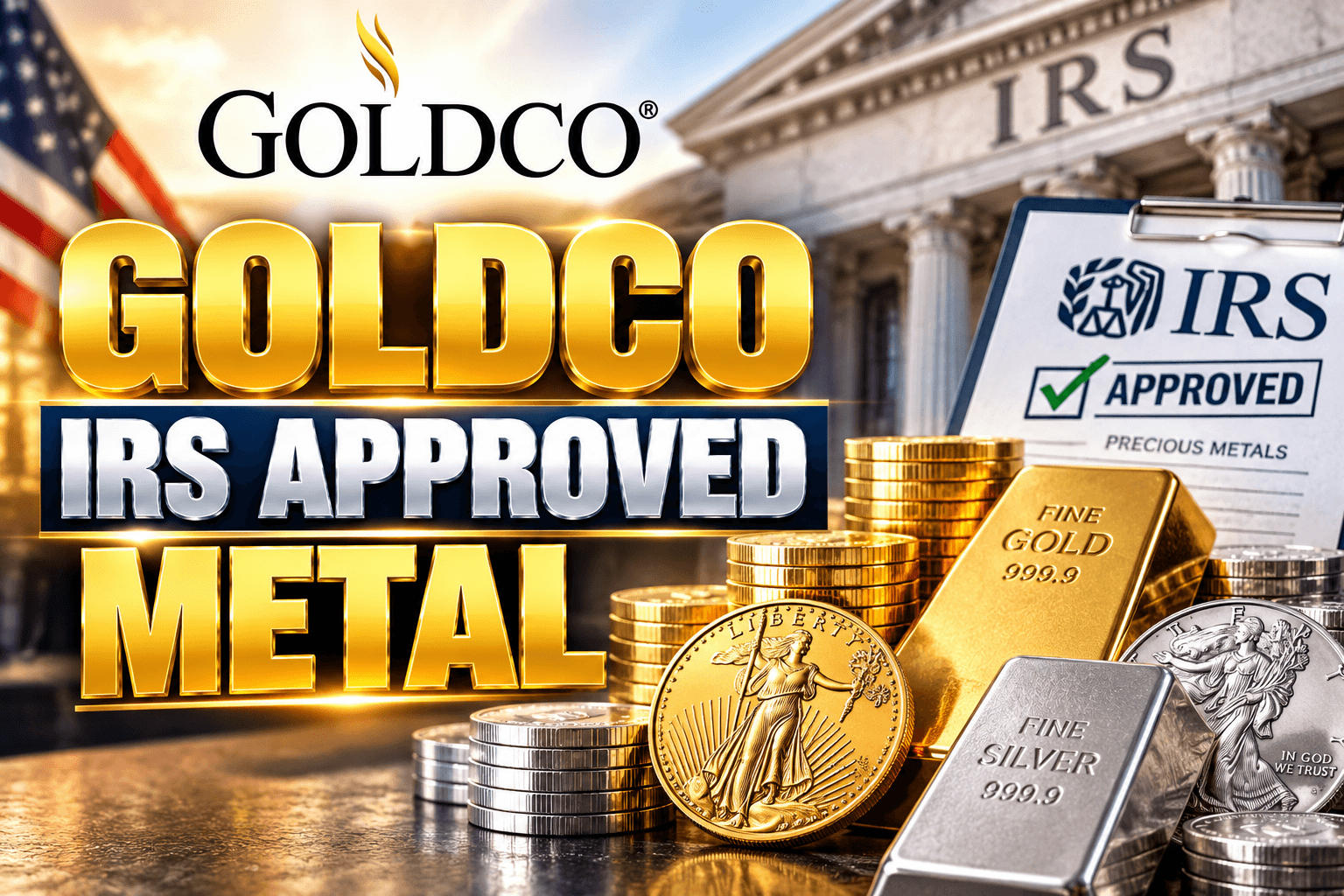
The phrase “IRS-approved” can be misleading if it sounds like the IRS personally endorses a specific company, coin dealer, or product lineup. It does not.
The IRS establishes the rules that govern which precious metals may be held in an IRA. A Gold IRA company and IRA custodian then work within those rules to help you acquire metals that meet them.
In practical terms, Goldco IRS approved metal refers to bullion products offered for a Precious Metals IRA that are intended to meet the Internal Revenue Code’s eligibility standards.
Before funds are used, the IRA custodian should confirm the asset can be held in the account.
That confirmation matters because an ineligible purchase can be treated as a distribution, potentially creating income taxes and, for those under age 59 1/2, an additional early-distribution penalty.
The central requirement is fineness. In general, IRA-eligible bullion must meet minimum purity levels:

 Gold must generally be at least .995 fine
- Silver must generally be at least .999 fine
- Platinum must generally be at least .9995 fine
- Palladium must generally be at least .9995 fine

 Gold must generally be at least .995 fine
There are limited statutory exceptions for certain widely recognized US-minted coins. This is why a coin’s popularity, age, or beauty is not enough to make it retirement-account eligible.
Related:
- Goldco Vs Noble Gold: Which Gold Dealer Is The Best?
- Best Gold Coins to Invest in for 2026
- IRS-Approved Gold Coins List for Gold IRAs: Avoid Expensive Mistakes
IRA-Eligible Gold: Bars and Coins
For many retirement investors, gold is the starting point. It has served as a store of value across monetary systems, wars, inflation cycles, and periods when confidence in paper assets has weakened.
Inside a Gold IRA, however, the goal is not simply to own gold. The goal is to own gold in a form that follows IRA rules and can be securely valued, stored, and sold when needed.
Common examples of gold products that may qualify include:
- American Gold Eagle coins
- American Gold Buffalo coins
- Canadian Gold Maple Leaf coins
- And certain gold bars from approved refiners that meet the .995 fineness standard

The American Gold Eagle is a notable exception to the general purity threshold because it is specifically permitted under the tax code despite being 91.67% gold.
Gold bars can be an efficient choice for investors focused on metal weight and potentially lower premiums per ounce.
Coins can offer greater flexibility because they are familiar, often available in smaller denominations, and may be easier to liquidate in portions.
Neither choice is automatically better. The right fit depends on your budget, time horizon, premium sensitivity, and preference for liquidity.
 For more information, request a FREE Gold & Silver Guide
Collectible Coins Are Usually a Problem
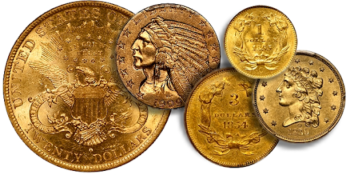 A common mistake is assuming that every government-minted gold coin belongs in an IRA. Many collectible, rare, commemorative, proof, or numismatic coins do not qualify.
A product may have real historical value and still be unsuitable for retirement-account ownership.
This is one reason to be cautious about high-pressure sales presentations built around scarcity or collectible upside.
Retirement investors should clearly understand whether they are purchasing bullion for metal exposure or a specialty product carrying a substantially higher dealer premium.
Ask for the exact product name, fineness, price over spot, and confirmation of IRA eligibility before the transaction is submitted.
Silver, Platinum, and Palladium Can Also Qualify
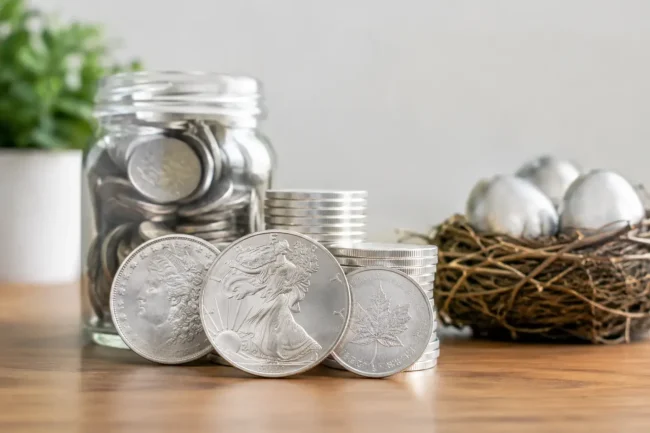
A Precious Metals IRA does not have to be limited to gold. Silver, platinum, and palladium can also play a role, provided the specific products meet the applicable standards.
This gives investors a way to diversify within the metals allocation rather than concentrating entirely in one asset.
Silver is often attractive because it combines monetary history with industrial demand. It is used in:
 Electronics
- Solar technology
- Medical applications
- And other manufacturing processes
For more information about the increasing silver demand versus the shortage and how that will affect silver prices, you can watch this video:
That demand can support the long-term case for silver, but it can also make the metal more volatile than gold.
IRA-Approved Silver
Silver also requires more physical storage space for the same dollar value, which can affect storage costs and practical portfolio design. IRA-eligible silver may include:
- American Silver Eagles
- Canadian Silver Maple Leafs
- And qualifying .999 fine bars and rounds produced by approved refiners

Platinum and palladium are generally more specialized choices. Both are heavily connected to industrial uses, which can create price movements that differ from gold’s traditional safe-haven behavior.
They can add diversification, but they may not be the right foundation for an investor who primarily wants stability and purchasing-power protection.
The Metal Cannot Be Stored at Home
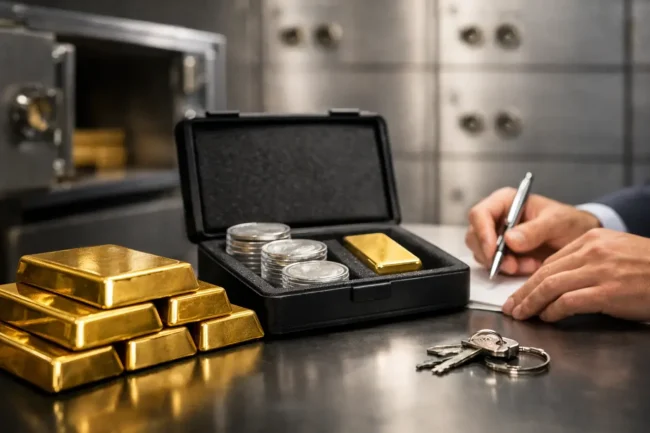 Even perfectly eligible bullion can create a tax problem if it is handled improperly after purchase. In a Precious Metals IRA, the metals must be owned by the IRA and held by an approved custodian or trustee.
They are generally stored in an authorized depository, not in your home safe, bank safe-deposit box, or personal possession.
The so-called “home storage IRA” idea deserves particular caution. Some promotions suggest you can establish an LLC, buy metals through your IRA, and keep them at home while maintaining tax advantages.
That arrangement carries significant legal and tax risk. The safer path is straightforward: use an established self-directed IRA custodian and an approved depository that provides insured, documented storage.
You may be able to choose between segregated and non-segregated storage. Segregated storage means your specific bars or coins are stored separately from other clients’ holdings.
Non-segregated storage holds like-kind metals together. Segregated storage may cost more, while non-segregated storage can be less expensive.
Ask the provider how metals are titled, audited, insured, and distributed when you eventually take withdrawals.
Related:
- 8 Gold IRA Scam Warning Signs Before You Buy
- 401(k) to Gold IRA Rollover Without Penalty: Rules and Steps
- TSP To Gold IRA: How To Convert Your TSP To Gold
How to Verify a Metal Before You Buy
 The best time to verify eligibility is before your IRA sends funds. Once you have identified a product, get the details in writing and have the custodian confirm that it is permitted for the account. This simple step can prevent expensive confusion later.
Start by confirming the metal type, weight, refinery or mint, and fineness. Then, ask whether the item is bullion or collectible inventory, what premium you are paying above the underlying metal value, and whether there are any buyback terms.
A reputable precious metals provider like Goldco should explain these points in plain language rather than rushing you toward a decision.
It also helps to compare the total account cost, not merely the coin price. Your expenses may include:
- IRA setup charges
- Annual custodian fees
- Storage fees
- Shipping or transaction charges
- And product premiums
A lower annual fee does not always offset an unusually high premium at purchase. Likewise, a low premium is not the whole story if service, storage, or liquidation support is weak.
For investors considering Goldco, the same disciplined questions apply. Review the proposed metals list with the custodian, understand the fee schedule, and make sure the investment allocation fits your broader retirement plan.
Precious metals can strengthen diversification, but they should complement your income needs, cash reserves, and other investments rather than replace thoughtful planning.
For more details, check out this Goldco review and their rollover process from a customer perspective:
Keep the Rollover Process Clean
Many buyers fund a Precious Metals IRA through a rollover from a 401(k), TSP, 403(b), or existing IRA.
Whenever possible, a direct trustee-to-trustee transfer or direct rollover is usually the cleaner route because the funds move between institutions rather than passing through your personal bank account.
An indirect rollover can create timing and withholding complications. If retirement money is paid to you personally, strict deadlines apply, and failing to complete the rollover correctly can make the amount taxable.
Your account type and employer-plan rules matter, particularly if you are still working for the company that sponsors your 401(k).
A provider can coordinate paperwork, but it cannot provide personalized tax advice. Before moving a large retirement balance, consider speaking with a qualified tax professional or financial adviser who understands self-directed accounts.
The objective is to preserve the tax-advantaged status of your retirement funds while building a more resilient allocation.
For more information, request a FREE Gold & Silver Guide
A Better Standard Than “IRS Approved” Metals
The right question is not only whether a coin is IRA eligible. It is whether the metal, account structure, fees, and storage arrangement make sense for the job you want your retirement savings to do.
Gold and other physical metals cannot be printed out of thin air or devalued in an instant by policy decisions. That is precisely why many Americans use them as a measured defense against inflation, currency weakness, and market uncertainty.
Choose eligible bullion carefully, keep custody rules clean, and avoid products you do not fully understand. A well-structured Precious Metals IRA should leave you with more confidence about your retirement security, not more unanswered questions.
Goldco IRS Approved Metal: FAQ
What does Goldco IRS Approved Metal Mean?
The phrase “IRS-approved” refers to bullion products offered for a Precious Metals IRA that are intended to meet the Internal Revenue Code’s eligibility standards. It does not mean the IRS personally endorses a specific company or product lineup.
Before funds are used, the IRA custodian should confirm the asset can be held in the account, since an ineligible purchase can be treated as a distribution with possible taxes and penalties.
What counts as IRA-eligible gold: bars and coins?
IRA-eligible gold includes bullion that meets the purity standards, such as American Gold Eagle coins, American Gold Buffalo coins, Canadian Gold Maple Leaf coins, and certain gold bars from approved refiners that meet the .995 fineness standard.
The American Gold Eagle is an exception to the typical purity threshold because it is specifically permitted under the tax code despite being 91.67% gold.
Can collectible coins be included in a Gold IRA?
Collectible coins, including many commemorative, proof, or numismatic coins, do not usually qualify for a Gold IRA. A product may have real historical value and still be unsuitable for retirement-account ownership, so it is important to confirm IRA eligibility before purchase.
Can silver, platinum, and palladium qualify for a Precious Metals IRA?
Yes, silver, platinum, and palladium can also qualify for a Precious Metals IRA if the specific products meet the applicable standards.
Silver often adds diversification due to industrial demand, while platinum and palladium are more specialized and linked to industrial uses, which can create different price movements than gold.
Why can’t the metal be stored at home, and how is storage handled?
In a Precious Metals IRA, the metals must be owned by the IRA and held by an approved custodian or trustee, typically stored in an authorized depository rather than at home.
Home storage promotions carry significant legal and tax risk; the safer path is a self-directed IRA with insured, documented storage in an approved depository, with options for segregated or non-segregated storage.