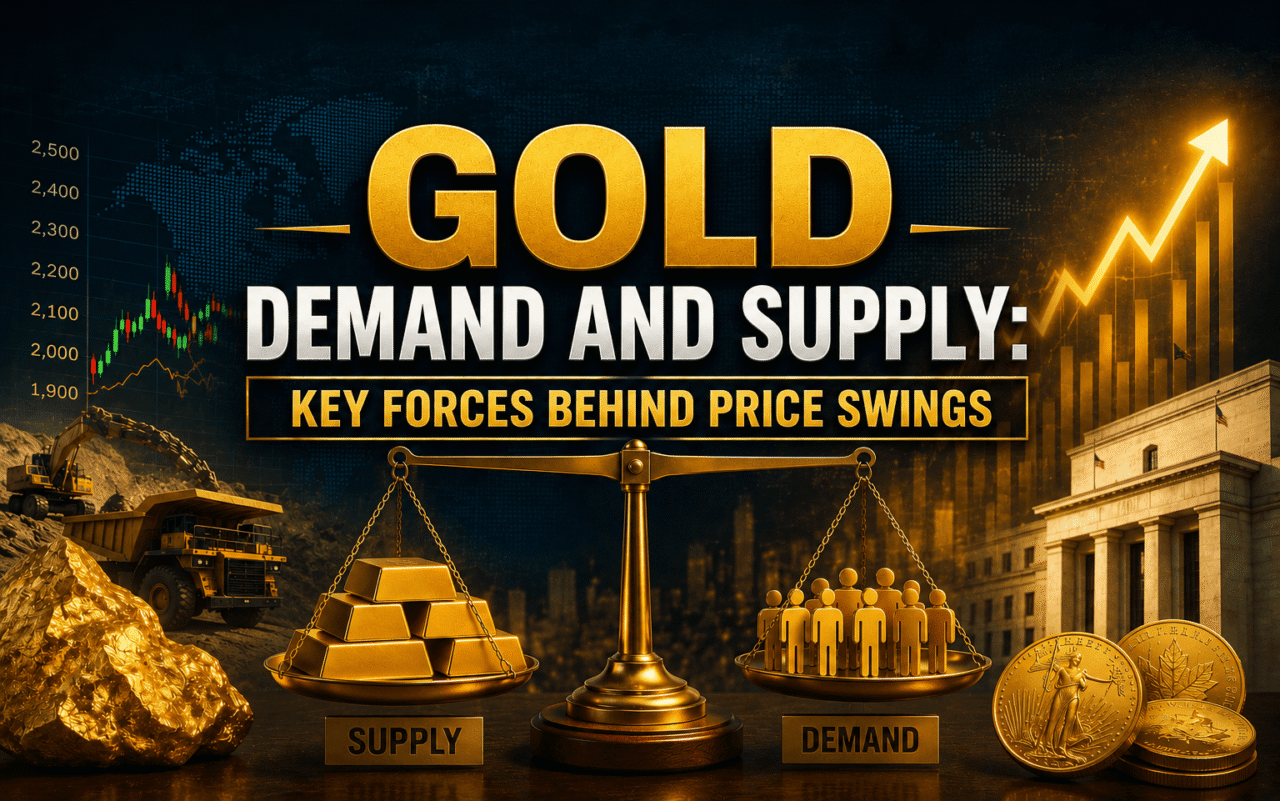
A gold price chart can move sharply even when mine output barely changes. That is because gold demand and supply are not as simple as a shortage of a consumer product.
Gold is a monetary metal, a jewelry material, an industrial input, and a long-term store of value held by central banks and private investors. When confidence in currencies, debt markets, or geopolitical stability weakens, demand can change far faster than the mining industry can respond.In this article, we’ll cover the key drivers behind increased gold demand while supply remains limited and how that affects future gold prices.
Let’s begin by taking a look at why gold demand has several different drivers and what they are.
Why Gold Demand Has Several Different Drivers
For Americans protecting retirement savings, understanding these forces helps put daily price swings in context. Gold is not a guarantee against losses, and it can be volatile over shorter periods.
But its limited supply, worldwide market, and history as an asset outside the banking system are central reasons many investors use physical bullion to diversify a portfolio built around stocks, bonds, and cash.
Unlike oil or copper, gold is not consumed and gone after it is used. Nearly all the gold ever mined is still believed to exist in some form, whether as jewelry, coins, bars, central-bank reserves, or industrial components.
That above-ground inventory can enter the market when owners choose to sell, which makes gold different from many commodities. Still, the willingness to hold or sell existing gold can change dramatically:
- ✅ A family may keep heirloom jewelry for decades
- ✅ A central bank may hold reserves as a strategic asset rather than a trading position
- ✅ Or, a retirement investor may buy bullion with the intention of passing it to children or grandchildren
These holders are not always sensitive to small price changes.
4 Key Drivers of Increased Gold Demand to Watch Out For
With the different reasons why people choose to invest in gold in mind, let’s take a look at 4 key drivers of gold demand that are predicted to take prices higher:
1. Investment Demand Can Move Quickly
Investment demand includes physical coins and bars, exchange-traded products backed by bullion, and institutional allocations to gold.
It often rises when investors are concerned about persistent inflation, declining purchasing power, banking stress, a weaker dollar, high government debt, or instability overseas.
This is why gold can rise even when interest rates are elevated or economic data looks mixed. Markets are forward-looking.
Investors may be responding not only to current conditions, but also to what they believe could happen to real interest rates, the dollar, equity valuations, or the broader financial system.
Physical demand is especially relevant for investors who want direct ownership. A surge in retail buying can create higher dealer premiums and delivery delays even if the quoted spot price has not moved as much.
Spot price reflects the wholesale market. The final price of a Gold Eagle, Gold Buffalo, or IRA-approved bar also reflects fabrication, distribution, inventory, and dealer costs.
 Request a FREE Info Kit to learn more about an IRS loophole on gold & silver!

2. Central Banks Are Major Long-Term Buyers
Central banks have become a closely watched source of gold demand. Countries hold gold reserves because gold is globally recognized, has no issuer’s promise behind it, and cannot be printed out of thin air.
For a central bank seeking to diversify reserves away from any single currency or government bond market, bullion can provide a measure of independence.
Central-bank purchases do not mean gold will move upward every month. They do, however, create an underlying source of demand that is often motivated by reserve management and long-term confidence rather than short-term speculation.
That distinction matters. A buyer accumulating reserves for years may be less likely to sell merely because the price rises for a few weeks.
To learn more about what central banks know is coming, watch this video about how they are currently dumping paper assets for gold:
3. Jewelry and Technology Still Matter
Jewelry remains a large source of global gold demand, particularly in countries where gold jewelry also serves as a household savings vehicle.
Demand can vary with local incomes, seasonal celebrations, import policies, and the gold price itself. When prices climb quickly, some consumers delay purchases or choose lighter-weight pieces.
4. Gold Is Used to Build Out AI Infrastructure
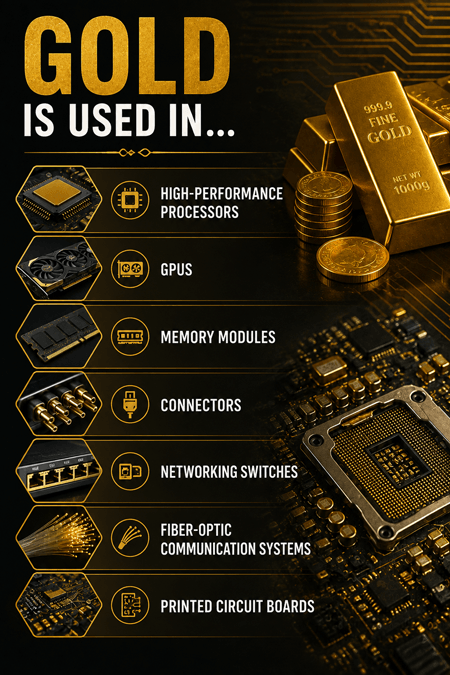 Gold also has industrial applications because it resists corrosion and conducts electricity well. It is used in electronics, medical devices, aerospace equipment, and specialized technology.
Not to forget, the big AI boom is expected to drive gold prices higher due to increased demand for gold in:
✅ High-performance processors
✅ GPUs
✅ Memory modules
✅ Connectors
✅ Network switches
✅ Fiber-optic communication systems
✅ And more!
Watch this video to learn more about the AI gold rush and its opportunity for investors who are actually buying the actual metals behind the AI boom:
Industrial use is smaller than jewelry and investment demand, but it provides another reason gold has value beyond financial sentiment.
Related:
- Gold Price Forecast 2026: Build a Resilient Retirement Portfolio
- 8 Gold IRA Scam Warning Signs Before You Buy
- Physical Gold Taxes: What US Investors Need to Know
Gold Supply Is Slow to Expand
On the supply side, mine production is the primary source of newly available gold. Yet building a new mine is a long process.
Companies must locate an economically viable deposit, secure permits, develop infrastructure, finance construction, and manage operating costs. In many jurisdictions, this can take a decade or longer.
That long lead time means a higher gold price does not immediately produce a flood of new supply.
Existing mines may increase output modestly, and miners may revisit projects that were previously uneconomic. But ore grades can decline over time, energy and labor costs can rise, and environmental or political risks can delay development.
Request a FREE Info Kit to learn more about an IRS loophole on gold & silver!
Recycling Is the Flexible Part of Supply
Recycled gold, often from jewelry, electronics, and old bullion holdings, can increase when prices rise. It is generally the most responsive source of supply because it does not require a new mine.
However, recycling has limits. Owners may see a rising gold price as a reason to hold rather than sell, especially when they are worried about inflation or currency risk.
This is one reason the relationship between price and supply is not mechanical. Higher prices can encourage selling, but they can also reinforce the belief that gold deserves a permanent place in a savings plan.
How Gold Demand and Supply Affect Gold Prices
 Gold prices are set in a global market where the balance between willing buyers and willing sellers changes constantly.
But investors should avoid treating annual mine production as the only supply figure that matters. Because so much gold exists above ground, the market is heavily influenced by the behavior of current holders.
If investors, central banks, and households want to increase their holdings at the same time, relatively little gold may be available at current prices.
Prices can adjust higher to attract sellers. Conversely, if financial markets are calm, real yields are attractive, and investors prefer income-producing assets, gold demand may soften, and prices can decline or stagnate.
The dollar and interest rates are also influential. Gold does not pay interest or dividends. When cash and bonds offer higher real returns, holding gold can carry an opportunity cost.
Yet this is not a one-way rule. Investors may still favor gold if they believe inflation will erode returns, debt risks are rising, or markets are underestimating future uncertainty.
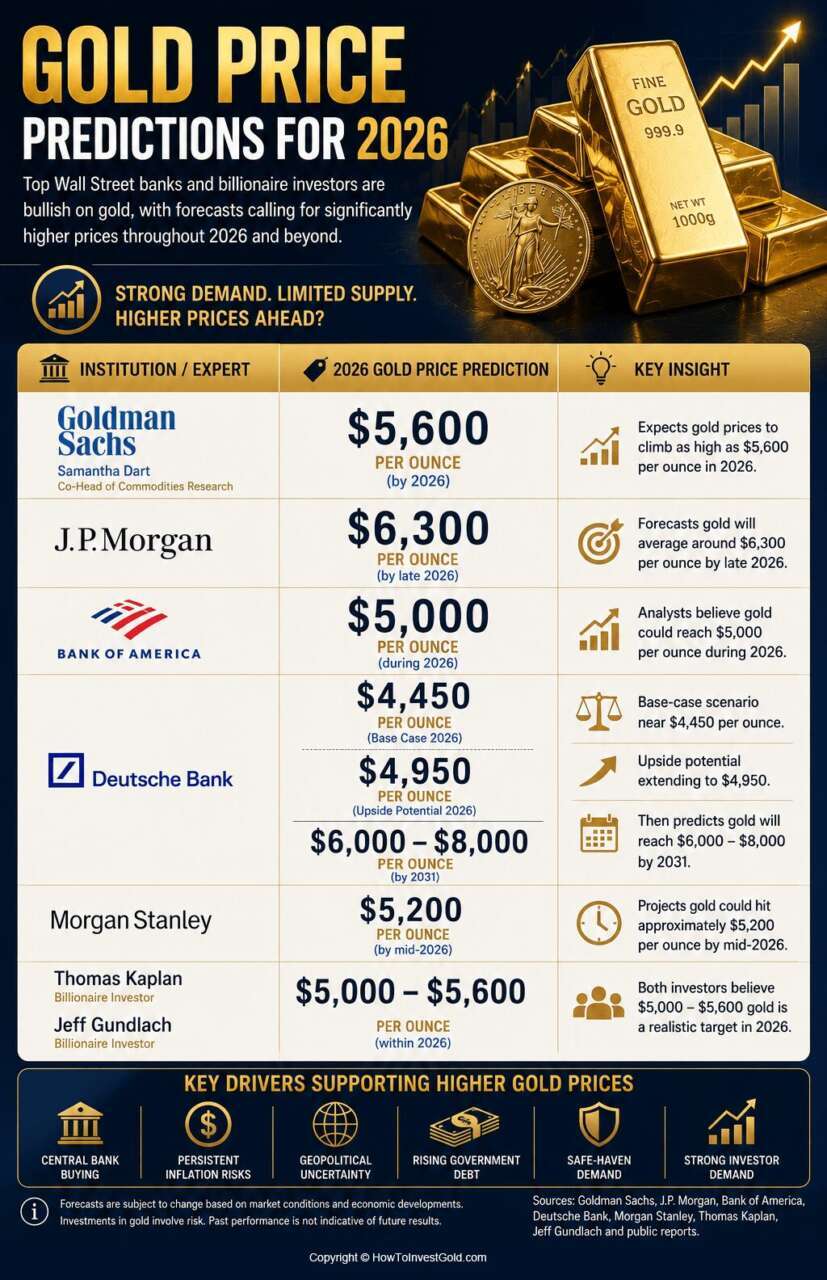
Let’s move on to what some major financial institutions predict the gold price to reach by the end of 2026.
Gold Price Forecast for 2026
 For retirement savers, the goal is not to predict every monthly gold-price movement.