A gold price forecast matters most when your retirement account feels overly dependent on assets that can lose value quickly.
Gold does not produce earnings or pay a dividend, but it has served as a store of value across currency crises, inflationary periods, recessions, and geopolitical shocks.
For investors protecting a 401(k), Traditional IRA, TSP, or family savings, the more useful question is not whether gold will rise every quarter. It is whether owning physical bullion can make the rest of a long-term portfolio more resilient.In this article, we’ll share a gold price forecast for the rest of the year, the forces that matter, three different outcome scenarios, price predictions from Wall Street’s major financial institutions, and how to protect your retirement savings with a Precious Metals IRA.
Let’s begin by taking a look at the main four forces that matter for gold prices.
Gold Price Forecast: 4 Key Forces That Matter for Prices
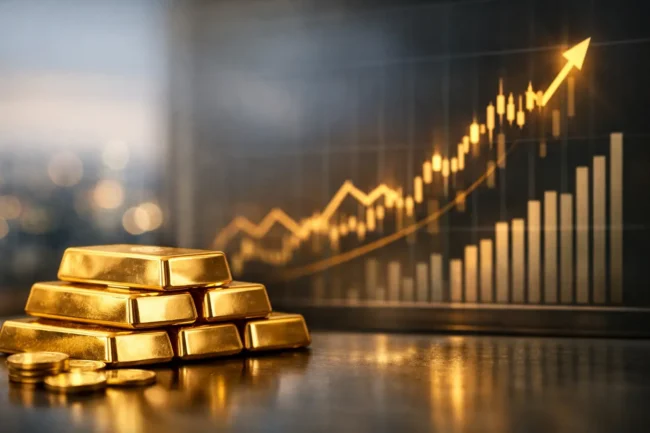 Gold prices can move sharply in either direction, and no forecast is certain. Still, several powerful forces are shaping the market:
- ☑️ Real interest rates
- ☑️ Inflation expectations
- ☑️ Central-bank demand
- ☑️ Government debt
- ☑️ The strength of the US dollar
- ☑️ And investor demand for safe-haven assets
Understanding how these forces interact can help you make a measured decision rather than chasing a headline or buying after a major price spike.
The direction of gold often comes down to confidence in paper assets and the purchasing power of the dollar. When investors expect stable growth, positive real yields, and a strong dollar, gold can face pressure.
When confidence weakens because of inflation, debt concerns, market stress, or conflict, demand for gold often increases. With that in mind, here are four key drivers of gold prices:
1. Interest Rates and Real Yields
Gold is priced in US dollars and does not generate income. That means rising interest rates can create competition from bonds, Treasury bills, and savings products.
But the key figure is not simply the stated interest rate. It is the real yield, or the return investors receive after accounting for inflation. If inflation runs above or close to interest rates, holding cash and many fixed-income investments may still erode purchasing power.
That environment can support gold. Conversely, materially higher real yields can make income-producing assets more attractive and may limit gold’s upside, at least temporarily.
Rate-cut expectations can also affect gold before the Federal Reserve makes an actual move. Markets tend to price in anticipated policy changes early.
A forecast based only on the next Fed meeting can therefore miss the broader trend in inflation, employment, growth, and bond-market expectations.
2. Inflation Is Not the Only Reason to Own Gold
Gold is commonly associated with inflation protection, and for good reason. A dollar can be created through monetary policy, while the supply of newly mined gold expands slowly.
Yet gold does not always move in a straight line with monthly inflation reports. There can be long stretches when inflation remains elevated but gold trades sideways or declines.
The stronger case for gold is broader wealth preservation. Inflation reduces purchasing power over time, while high government borrowing, currency devaluation concerns, and financial-system stress can increase the appeal of an asset held outside the banking system.
Physical gold cannot be printed out of thin air or devalued in an instant by a policy decision.
3. Central Banks Are Changing the Demand Picture
Central-bank gold purchases have become a major long-term factor for the market. Many countries are seeking to diversify reserve holdings that have historically been concentrated in dollars and sovereign debt.
Countries like Poland, Kazakhstan, China, India, and Turkey have stocked up on enormous amounts of gold this year:
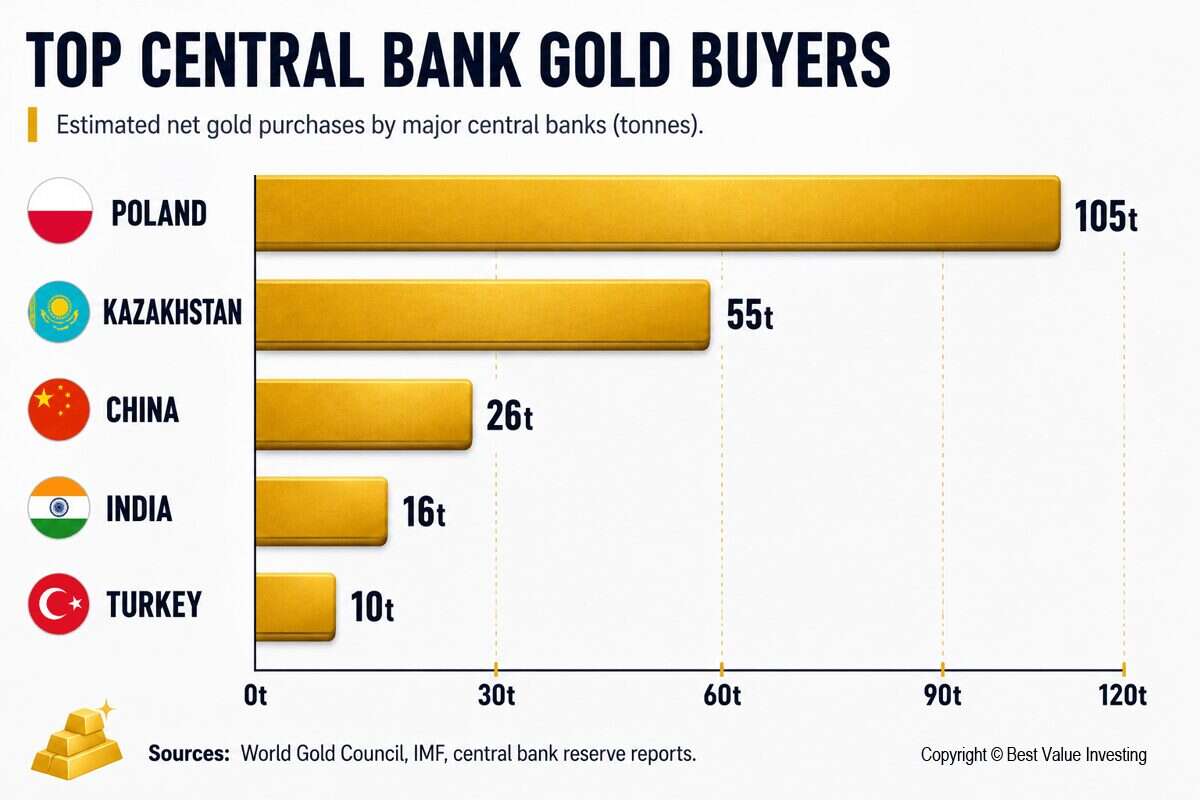
Their motivations vary, but reserve diversification, geopolitical uncertainty, sanctions risk, and concerns about debt levels are recurring themes.
Central banks do not typically trade gold with the same short-term mindset as retail investors. Their purchases can provide a durable source of demand even when Western investment demand slows.
This does not guarantee higher prices, but it helps explain why gold can remain supported during periods when conventional forecasts expect it to weaken.
For more information, watch this video about why central banks are dumping paper assets for gold right now:
4. Dollar Strength and Global Uncertainty
A stronger US dollar can make gold more expensive for buyers using other currencies, which can weigh on demand. A weaker dollar often provides the opposite effect.
However, the relationship is not absolute. During severe market stress, investors may seek both dollars and gold at the same time.
Geopolitical events also matter because they expose risks that are difficult to model in earnings forecasts or bond yields. War, trade disputes, supply disruptions, banking concerns, and sovereign-debt pressure can rapidly shift investor behavior.
Gold’s value in these moments is not that it predicts every crisis. It is that it may provide a measure of insurance when traditional financial assets are moving together in the wrong direction.
 Unlock the power of gold & silver for investing by requesting a FREE Gold IRA Guide:

Related:
- Gold Demand and Supply: 4 Key Forces Behind Price Swings
- 8 Gold IRA Scam Warning Signs Before You Buy
- Physical Gold Taxes: What US Investors Need to Know
Three Scenarios for the Future Gold Price Outcome
Rather than relying on a single price target, retirement investors should consider a range of plausible outcomes. Price targets can be useful reference points, but they often imply a level of precision that the market cannot deliver.
Here are three different scenarios for gold prices this year:
1. The Bullish Case
Gold could see sustained support if inflation proves difficult to control, real yields fall, the Federal Reserve shifts toward lower rates, or economic growth weakens.
Continued central-bank accumulation and renewed investment demand through bullion purchases and gold-backed funds could add momentum.
A more serious loss of confidence in government debt or major currencies could push safe-haven demand higher still. In this environment, gold may act as both a diversifier and a direct response to concerns about purchasing power.
2. The Middle Path
The more common outcome may be a volatile but broadly constructive market. Inflation could moderate without disappearing, rates could remain meaningful but trend lower over time, and central banks could continue accumulating reserves.
Gold might experience pullbacks as investors react to positive economic data or temporary dollar strength, then recover when concerns reappear.
For long-term holders, this scenario reinforces why entry timing should not be the only decision. A disciplined purchase plan and an allocation sized for your actual risk tolerance can matter more than buying at the perfect price.
3. The Bearish Case
Gold can decline:
- ✅ If real interest rates stay high
- ✅ Inflation cools decisively
- ✅ The dollar strengthens
- ✅ And investors become more confident in stocks and bonds
Profit-taking after a major rally can also create sharp corrections, even when the long-term reasons for owning gold remain intact.
This is the trade-off investors should acknowledge before buying. Gold is not a guaranteed return vehicle, and it can be volatile over months or even years.
An investor who may need cash soon should not treat bullion as a substitute for an emergency fund or near-term spending reserve.
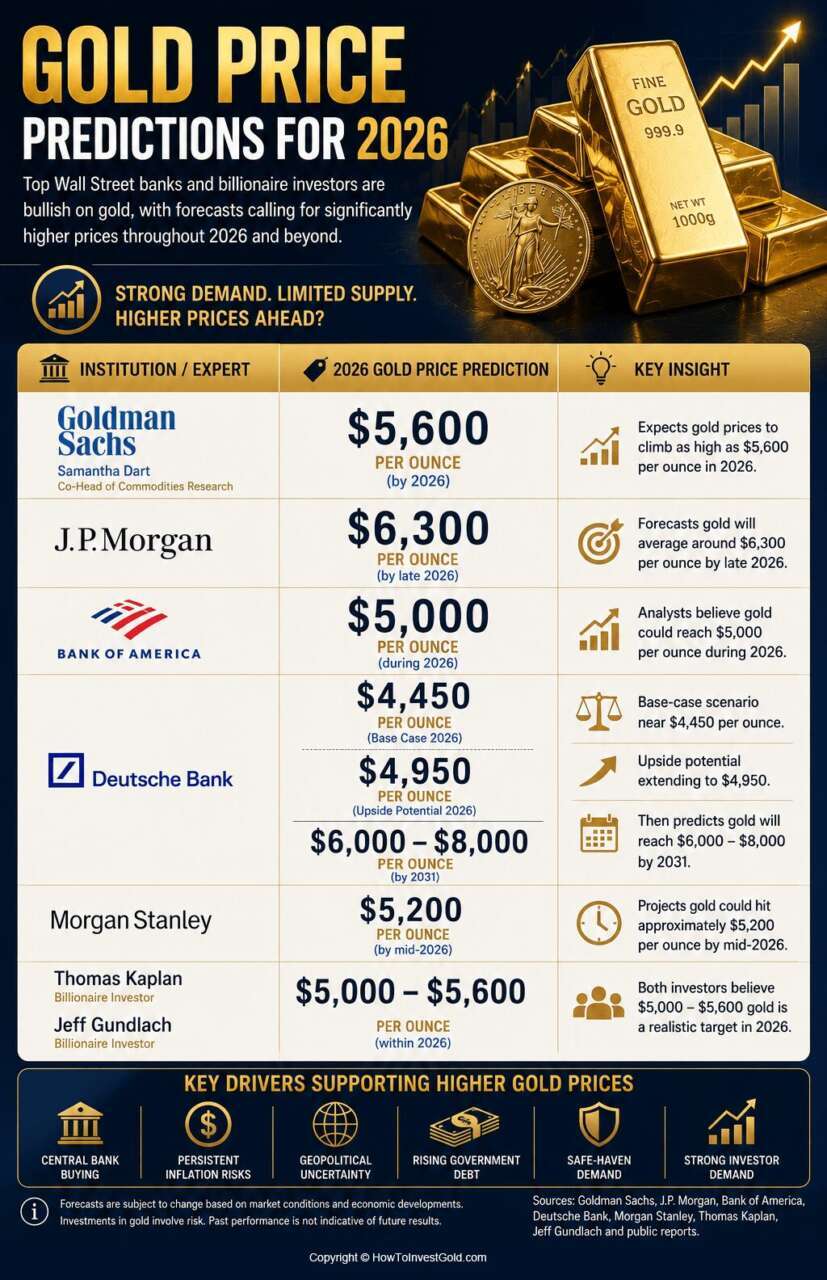
Let’s take a look at gold price predictions for the rest of the year from some of Wall Street’s major financial institutions and millionaires.
Gold Price Predictions for 2026
If you’d rather watch a video than continue reading the text below, check out this video about the possible gold revaluation to $38,000 that is currently discussed to solve the global debt issue:
 A gold price forecast should support a plan, not replace one. If your retirement savings are concentrated in equities, bonds, cash, or dollar-based funds, physical precious metals may offer diversification that behaves differently during periods of stress.
 Before acting on any bullish gold headline, decide what job gold will perform in your financial plan. Is it intended to help: