A one-ounce gold coin may contain the same amount of gold as a one-ounce bar, yet cost noticeably more at checkout. That difference is the premium, and learning how to assess bullion premiums can protect more of your retirement savings or personal wealth from unnecessary costs.
A higher premium is not automatically a bad deal, but it should always have a clear reason behind it. For investors using gold and silver as a store of value outside the financial system, premiums are part of the ownership cost.
The goal is not simply to find the lowest advertised price. It is to buy recognizable, liquid bullion at a fair all-in cost and understand what you may receive when you sell.In this guide, we’ll show you how to assess bullion premium before you buy. We’ll provide you with a simple calculation and 4-step process on how to calculate premiums so that you can spot the best products and prices.
Let’s begin by taking a look at what a bullion premium actually is.
What a Bullion Premium Actually Is
 Bullion’s spot price is the current market price for a troy ounce of raw gold, silver, platinum, or palladium. It changes throughout the trading day. The premium is the amount charged above that spot price for a finished, deliverable product.
A dealer’s premium covers more than profit. It can include:
 Minting
- Fabrication
- Transportation
- Insurance
- Inventory financing
- Hedging
- Costs
- Labor and market demand
For IRA purchases, there may also be administrative, custodial, and approved-depository costs that are separate from the metal’s premium.
To compare products of different sizes, use the percentage premium: Premium percentage = (Product price – Spot price) / Spot price x 100
Suppose gold spot is $2,400 per ounce and a one-ounce bullion coin costs $2,520. The dollar premium is $120, while the percentage premium is 5%.
That percentage gives you a cleaner comparison than the dollar figure alone, especially when comparing gold with silver or fractional products.
Related:
- Best Gold IRA Companies for 2026 (Reviewed & Rated)
- 8 Gold IRA Scam Warning Signs Before You Buy
- 401(k) to Gold IRA Rollover Without Penalty: Rules and Steps
How to Assess Bullion Premiums Without Guesswork in 4 Steps
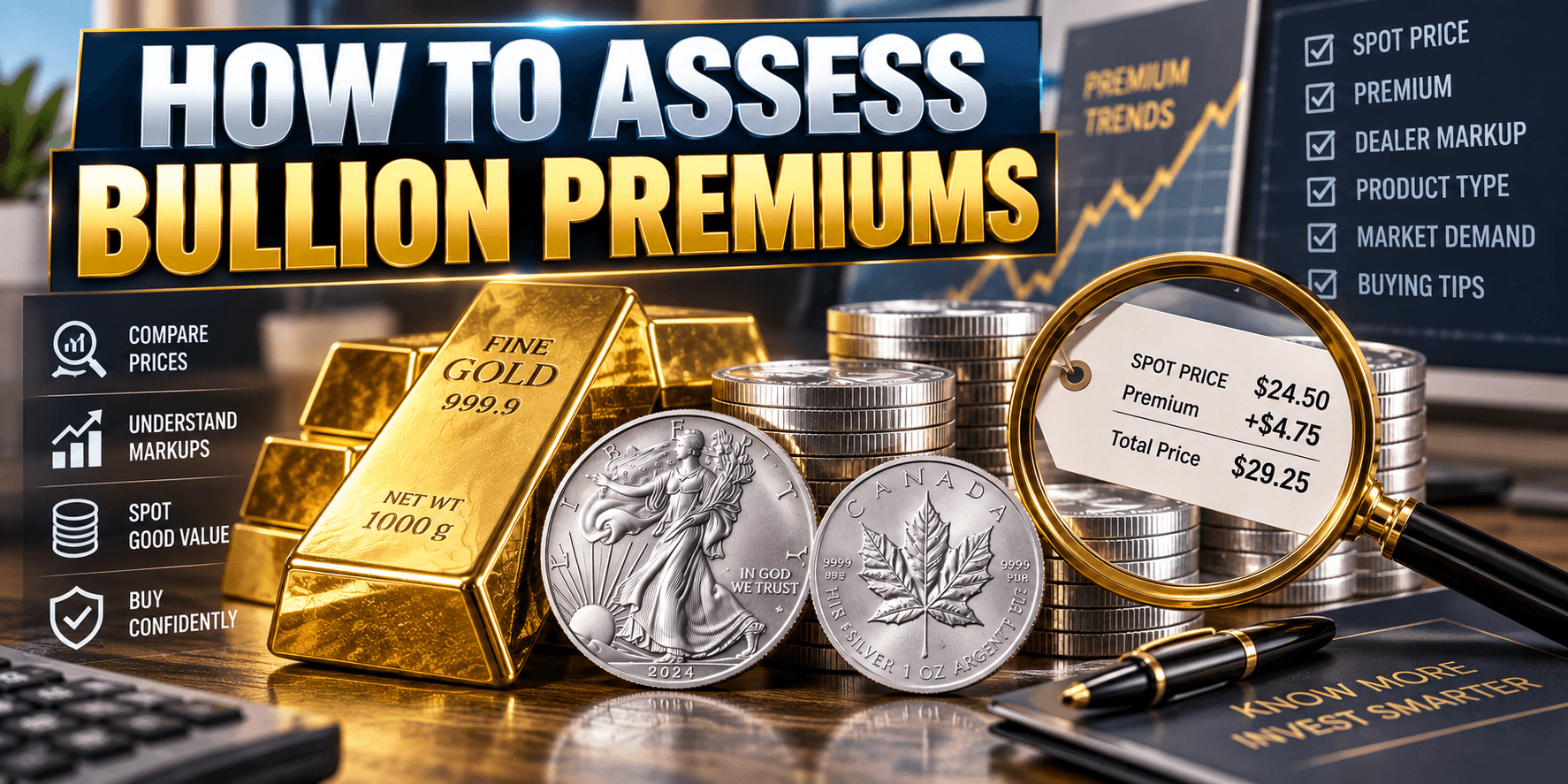
Step 1. Start by checking the current spot price at roughly the same time you receive a quote. A quote from this morning cannot be fairly compared with a product price from later in the afternoon if gold or silver has moved sharply.
Ask whether the quoted price is locked, how long the lock lasts, and whether payment method changes the price.
Step 2. Then compare the same product across several established dealers. Do not compare a government-minted coin with a generic bar and assume the difference is excessive.
 Compare one-ounce American Gold Eagles with other American Gold Eagles, or a ten-ounce silver bar with comparable ten-ounce silver bars.
Step 3. The next step is to calculate the all-in delivered price:
- Shipping
- Insurance
- Credit card surcharges
- Minimum-order rules
- And state sales tax can alter what initially looked like a low-premium purchase
A dealer offering a lower product premium, but charging meaningful shipping or processing fees, may not be less expensive after all.
Step 4. Finally, ask about the dealer’s buyback policy before buying. The number that matters at liquidation is not only your purchase premium.
It is the spread between what you pay and what the dealer will pay to repurchase the same item. A recognizable coin with a modestly higher upfront premium may be easier to sell and command a better bid than an obscure product.
Focus on the Buy-Sell Spread
The buy-sell spread is the gap between the dealer’s selling price and its current buyback price.
It is one of the most practical measures of a bullion purchase because it shows how much the metal must rise before you break even, before considering taxes or storage fees.
For example, imagine a coin sells at $2,520 when spot is $2,400. If the dealer’s buyback offer is spot plus $35, the immediate spread is $85 per ounce. A different coin might sell for $2,490 but have a buyback bid at spot minus $25, creating a $115 spread.
The first option has the higher purchase price, yet it may be the more efficient holding.
Buyback quotes change with market conditions, inventory needs, and product demand. Still, an established dealer should be willing to explain how it typically prices repurchases.
Be cautious if a salesperson talks only about upside potential and avoids direct questions about resale value.
 Unlock the power of gold & silver investing by requesting a FREE Gold IRA Guide:

Why Different Bullion Products Carry Different Premiums
Product type is one of the largest drivers of premiums. Smaller denominations generally cost more per ounce because fabrication and distribution costs are spread over less metal.
A one-tenth-ounce gold coin usually carries a substantially higher percentage premium than a one-ounce coin. That may be worthwhile for investors who value flexibility when selling in smaller increments, but it is a trade-off.
Government-minted coins often cost more than privately minted bars and rounds.
American Gold Eagles, American Gold Buffalos, American Silver Eagles, Canadian Maple Leaf Coins, and other widely recognized sovereign coins can command higher premiums because of brand recognition, established demand, security features, and strong liquidity.
 American Gold Eagles, American Gold Buffalos, American Silver Eagles, Canadian Maple Leaf Coins, and other widely recognized sovereign coins can command higher premiums because of brand recognition, established demand, security features, and strong liquidity.
 In periods of financial stress, that recognition can matter.
 Bars often provide more metal for each dollar invested. Larger gold bars and silver bars typically have lower premiums per ounce, making them attractive for investors focused on efficient accumulation.
The trade-off is that larger bars can be less flexible to sell in portions, and some products may have narrower resale markets than the best-known coins.
Limited-mintage, proof, colorized, commemorative, and collectible coins deserve special care. Their prices may include a numismatic value that goes far beyond metal content.
These items can be appropriate for collectors, but they are usually not the most direct choice for someone seeking inflation protection, retirement diversification, and straightforward liquidity.
Market Conditions Can Change the Premium Math
Premiums are not fixed. During periods of heavy retail demand, refinery bottlenecks, disrupted transportation, or shortages of small investment products, premiums can rise even if spot prices are falling.
Silver premiums have historically been especially sensitive because fabrication costs represent a larger share of a low-priced ounce of metal.
That does not mean investors should abandon bullion when premiums rise. It means they should separate two questions:
- Is the metal attractive at its current spot price?
- And is the particular product fairly priced relative to available alternatives?
If premiums are unusually high, consider whether a different format offers better value. A larger bar, a more available sovereign coin, or a patient purchase plan may reduce the cost.
On the other hand, waiting indefinitely for a perfect premium can leave a portfolio overly concentrated in assets tied to the dollar, stock market, or banking system. Wealth preservation often requires balance rather than perfect timing.
For example, there’s a massive silver shortage right now because of hyper-scale AI data center buildouts, which can boost prices to record levels. Watch the video to learn more:
Special Considerations for Gold and Silver IRAs
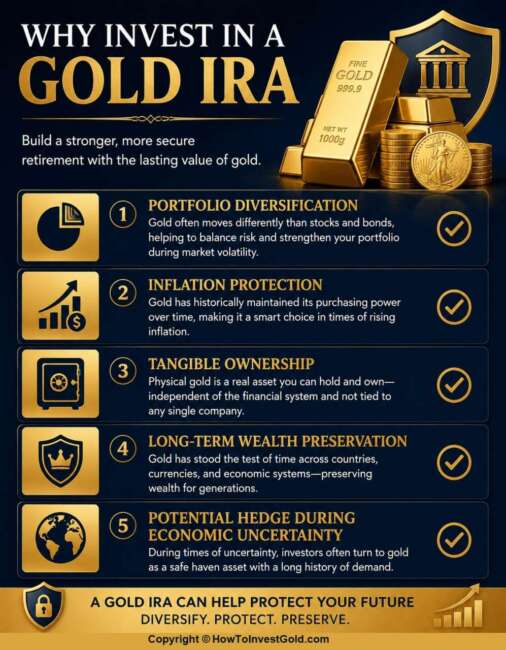 A Precious Metals IRA is not the same as buying coins for home delivery. IRS rules require eligible metals to meet specific purity standards, with limited exceptions for certain government-minted coins.
The metals must be held by an approved custodian and stored at an approved depository rather than kept personally at home.
When evaluating an IRA provider’s bullion pricing, ask for the exact product, metal weight, price over spot, and all account-related fees.
These commonly include:
- Setup fees
- Annual custodian fees
- And storage charges
A low premium does not erase high recurring fees, while a slightly higher premium may be reasonable if the precious metals dealer offers transparent pricing, reliable rollover support, established storage arrangements, and responsive service.
Do not assume every popular coin is IRA eligible, or that every low-cost product is available through every custodian.
The right choice depends on your account size, time horizon, desired mix of gold and silver, and need for liquidity.
For retirement investors, simplicity and compliance are often more valuable than chasing a marginal price difference on a product that does not fit the account.
If you’re searching for the best company, request a FREE Gold IRA Checklist:

Related:
- How to Start a Gold IRA in 3 Simple Steps
- How to Start a Silver IRA in 3 Simple Steps
- How to Open a Crypto IRA Without Costly Mistakes
Red Flags That Deserve a Pause
Pressure is not a pricing strategy. Take extra time when a dealer uses fear to push high-premium products, claims a promotion is ending within minutes, or discourages you from comparing prices.
Precious metals can help defend purchasing power during inflation, market volatility, and currency uncertainty, but no legitimate investment decision requires blind urgency.
Also be wary of vague language such as “rare bullion” or “exclusive retirement coins” without a clear explanation of the item’s metal content, mintage, market demand, and buyback terms.
Verify whether a product is standard bullion or a collectible carrying a large markup. For major purchases, review a company’s reputation, customer feedback, complaint patterns, and pricing transparency before funding an order or initiating a retirement-account rollover.
A sound bullion purchase should leave you able to explain three numbers: the spot price, the premium you paid, and the expected resale spread.
If those numbers are clear, you are far better positioned to use physical gold or silver as it is intended – a tangible, disciplined component of long-term wealth protection.
If you still wonder whether precious metals are a good investment right now, check out this video about how a dollar collapse is inevitable and how to protect your money in these volatile times:
How to Assess Bullion Premiums: FAQ
What is a bullion premium and how do I calculate it?
A bullion premium is the amount charged above the spot price for a finished, deliverable product.
The basic calculation is Premium per ounce = Product price – Spot price per ounce, and to compare different sizes use Premium percentage = (Product price – Spot price) / Spot price x 100. For example, if gold spot is $2,400 per ounce and a one-ounce bullion coin costs $2,520, the premium is $120 or 5%.
How should I compare bullion premiums across different products?
Start by checking the current spot price at roughly the same time you receive a quote. Then compare the same product across established dealers, ensuring you compare like‑for‑like items (for example, one‑ounce American Gold Eagles with other one‑ounce Eagles).
Calculate the all‑in delivered price by including shipping, insurance, credit card surcharges, minimum orders, and any state tax or related fees. Finally, ask about the dealer’s buyback policy to understand the resale spread at liquidation.
Why do different bullion products carry different premiums?
Product type is one of the largest drivers of premiums. Smaller denominations cost more per ounce because fabrication and distribution costs are spread over less metal; government‑minted coins often cost more than privately minted bars and rounds.
Also, collectible or limited‑mintage items can have higher prices due to numismatic value, while larger bars generally have lower premiums per ounce but less flexibility for selling in portions.
What is the buy-sell spread and why is it important?
The buy-sell spread is the gap between the dealer’s selling price and its current buyback price. It shows how much the metal must rise before you break even, before taxes or storage fees.
For example, if a coin sells at $2,520 when spot is $2,400 and the buyback is spot plus $35, the spread is $85 per ounce; another coin at $2,490 with buyback at spot minus $25 has a $115 spread. The size of this spread helps determine which option is more cost-effective to hold.
What considerations apply to bullion in Gold and Silver IRAs?
IRAs require metals to meet purity standards and be held by an approved custodian and stored at an approved depository rather than at home. When evaluating an IRA provider’s bullion pricing, ask for the exact product, metal weight, price over spot, and all account-related fees, including setup, annual custodian, and storage fees.
A low premium does not erase high recurring fees, and the right choice depends on account size, time horizon, balance of gold and silver, and liquidity.
Unlock the power of gold & silver investing by requesting a FREE Gold IRA Guide: