A Gold IRA is only as secure as the chain of custody behind it. You may select IRA-approved coins and bars with real, lasting value, but the protection of those assets depends on where they are held, how they are recorded, and who controls access.
That is why comparing top secure gold depositories is not a minor administrative step. It is central to protecting retirement wealth from loss, confusion, and counterparty risk.
For most retirement investors, the right choice is not simply the closest vault or the facility with the lowest annual fee. It is a depository approved by your self-directed IRA custodian, supported by documented insurance and auditing practices, and structured to keep your bullion clearly accounted for.
The goal is straightforward: own physical precious metals that cannot be printed out of thin air, while maintaining the rules and safeguards required for tax-advantaged retirement investing.In this article, we’ll cover the top 4 most secure gold depositories for Precious Metals IRA investors and questions to ask before choosing a depository.
Let’s begin by taking a look at what makes a gold depository secure.
What Makes a Gold Depository Secure and Safe?
 A qualified precious metals depository is far more than a locked building. It is a specialized facility designed to receive, inspect, inventory, store, and ship bullion under controlled procedures.
In a Gold IRA, the depository works alongside your IRA custodian and metals dealer. The dealer supplies the approved bullion, the custodian administers the account, and the depository holds the metals on behalf of the IRA.
Security begins with physical controls:
- ✅ Monitored access
- ✅ Layered alarms
- ✅ Surveillance
- ✅ Secure vault construction
- ✅ Trained personnel
- ✅ And strict receiving and shipping protocols
Yet the paperwork matters just as much.
A reputable facility like the Delaware Depository should maintain detailed inventory records, conduct regular reconciliations, and carry insurance appropriate to the metals held in custody.
A depository’s reputation also matters. Investors should look for facilities with a long operating history, established institutional relationships, and clear processes that their Gold IRA company and custodian can explain in plain language.
Do not assume that a familiar company name automatically answers every question. Ask how your specific holdings will be titled, reported, insured, and verified.
Related:
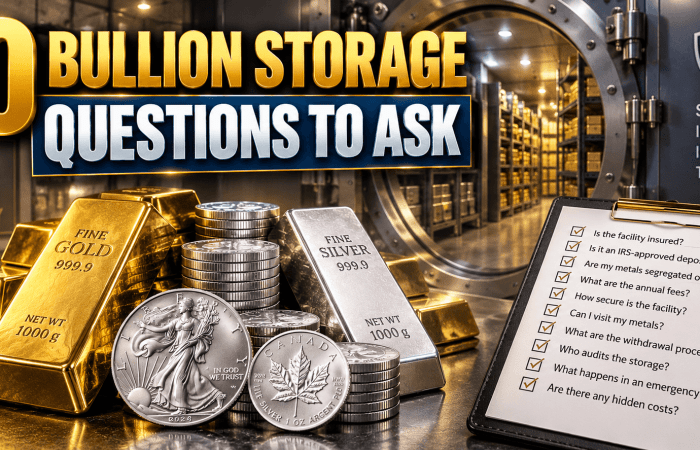
- Protect Your Metals: Top 10 Bullion Storage Questions to Ask
- How to Buy Silver Bullion Without Costly Mistakes: A Beginner’s Guide
- Gold Demand and Supply: 4 Key Forces Behind Price Swings
Top 4 Secure Gold Depositories Used for Gold IRAs

There is no single best vault for every investor. Availability depends on the custodian and Gold IRA provider you choose, your preferred storage location, and whether you want segregated or non-segregated storage.
Still, several names regularly appear in the precious metals retirement market because they provide established storage infrastructure and work with major IRA custodians.
1. Delaware Depository
Delaware Depository is one of the most recognized names in Gold IRA storage. It is widely used by precious metals dealers and self-directed IRA custodians, which can make the account-opening and funding process more straightforward for first-time buyers.
Investors often choose Delaware Depository for its longstanding presence in the industry and its role in institutional-grade precious metals custody.
Depending on the arrangement, it may offer both commingled and segregated storage options. Confirm the exact option, annual charge, and insurance details through your custodian before funding an account.
2. Brink’s Global Services
Brink’s is a globally known secure logistics and valuables company with a strong presence in bullion transportation and storage.
For investors, that broader logistics experience can be meaningful because bullion security does not begin only after metals arrive at the vault. It also involves a documented, insured process from dealer shipment through receipt and inventory.
Brink’s storage may be available through certain IRA custodians and dealers rather than directly to every retail investor. If it is offered in your account, ask whether the listed fee includes storage, insurance, account reporting, and eventual distribution or shipment charges.
3. International Depository Services
International Depository Services, often called IDS, is another established choice for precious metals investors.
It has been used for Gold IRAs and offers storage in multiple locations, which may appeal to investors who want a degree of geographic choice for their bullion.
Location is a legitimate consideration, but it should not override custody quality. A vault outside your home state may still be the better option if it has stronger procedures, better custodian integration, or a clearer insurance and audit framework.
In an IRA, convenience of personal access is not the main objective. Proper third-party custody is.
4. Loomis International
Loomis is another major secure cash and valuables logistics provider with precious metals capabilities. Its reputation in high-security transport and custody makes it a familiar option in institutional and retail bullion arrangements.
As with any facility, the relevant question is not merely whether Loomis is secure in general. It is whether your selected custodian uses that facility, what storage model applies to your account, and what the written agreement says about fees and coverage.
Your provider should be able to answer without vague assurances.
 Request a FREE Gold & Silver Guide:
Segregated vs Non-Segregated Storage: Which Is Best?
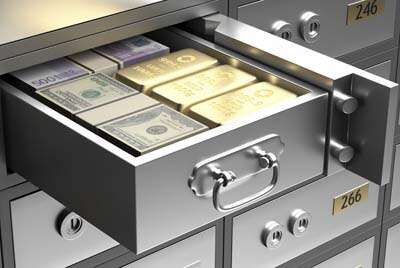 This is one of the most important choices in physical metals storage. Segregated storage generally means your specific coins and bars are stored separately from the holdings of other clients.
The metal you buy is the metal recorded to your account and set aside for you.
Non-segregated, sometimes called commingled, storage means your metals are held in a shared inventory with bullion of the same type and purity belonging to other clients.
Your ownership is still documented, but you may receive equivalent metals rather than the identical bars or coins when taking a distribution.
Segregated storage typically costs more, especially for silver because it requires more physical space. For an investor holding a modest Gold IRA focused on widely traded bullion, non-segregated storage may be a reasonable way to control annual costs.
For someone who values specific bars, coins, serial-number tracking, or maximum separation of holdings, the extra cost of segregation may be worthwhile.
Neither arrangement is automatically superior in every case. What matters is that you understand which one you are paying for and that the records support your ownership.
Questions to Ask Before Selecting a Depository for Your Metals
Your Gold IRA company may present a storage option as part of a package, but you should still review the details before authorizing a purchase. A short conversation can reveal whether you are receiving a clear custody arrangement or simply a marketing promise.
- ✅ Ask whether the depository is approved by your IRA custodian and whether your metals will be stored under your IRA’s name or account designation
- ✅ Ask how often inventory is reconciled, whether independent audits are performed, and how discrepancies would be addressed
- ✅ You should also ask about the insurance policy: who provides it, what events it covers, and whether coverage applies while metals are in transit as well as in storage
Fee transparency deserves equal attention. Some providers bundle storage and insurance into one annual charge, while others separate custodian, storage, transaction, and shipping fees.
A low introductory price can become less attractive if renewal costs are unclear. Request a written fee schedule and consider the cost over several years, not just the first year.
Finally, ask about distributions. When you reach the point of taking required minimum distributions or want an in-kind distribution of physical metals, you should know the process, expected timing, and shipping costs.
A secure vault should support orderly access through the proper IRA process, not create unnecessary obstacles.
Gold IRA Storage Rules
 The IRS generally requires precious metals held in an IRA to remain with a qualified trustee or custodian. Storing Gold IRA coins at home, in a personal safe, or in a safe-deposit box you control can create serious tax problems.
The so-called home-storage Gold IRA is often marketed as a shortcut to control, but it can expose the account to a prohibited transaction and possible distribution treatment.
This is one reason established depositories matter. They provide the independent custody structure needed to help keep IRA assets separate from your personal possession.
If you want metals that you can hold directly, that can be done through an outright cash purchase outside your retirement account. The trade-off is that you give up the tax-deferred or tax-free potential associated with an IRA, depending on account type.
Related:
- How to Start a Gold IRA in 3 Simple Steps
- How to Start a Silver IRA in 3 Simple Steps
- Best Gold IRA Companies for 2026 (Reviewed & Rated)
Choose Security You Can Verify
The best depository choice is usually the one that fits a reputable custodian, provides written answers, and gives you confidence that your metals are properly held for the long term.
Do not select a vault based only on a familiar name, a promotional offer, or a dealer’s verbal assurance.
Gold can serve as a disciplined store of value when markets, currencies, and government debt raise legitimate concerns. But physical ownership requires sound custody.
Take the extra time to verify the facility, understand the storage model, and read the fee and insurance terms. Retirement security is strengthened when every part of the Gold IRA, including the vault, is chosen with care.
If you’re searching for the best company, request a FREE Gold IRA Checklist:

Secure Gold Depositories: FAQ
What makes a gold depository secure and safe?
A qualified precious metals depository is more than a locked building; it is a specialized facility designed to:
- Receive
- Inspect
- Inventory
- Store
- And ship bullion under controlled procedures
This is done with physical controls such as monitored access, layered alarms, surveillance, secure vault construction, trained personnel, and strict receiving and shipping protocols, plus detailed inventory records, regular reconciliations, and appropriate insurance.
What are the top 4 secure gold depositories used for Gold IRAs?
The article highlights Delaware Depository, Brink’s Global Services, International Depository Services, and Loomis International as established options that work with major IRA custodians, though availability depends on your custodian and whether you choose segregated or non-segregated storage.
Segregated vs non-segregated storage: which is best?
Segregated storage keeps your specific coins and bars separate from others, usually at higher cost, while non-segregated (commingled) storage shares a pool with other clients’ bullion.
Ownership is still documented, but you may receive equivalent metals during distributions. Choose based on cost and whether you need exact bars or serial-number tracking.
What questions should I ask before selecting a depository for my metals?
Ask:
- Whether the depository is approved by your IRA custodian
- Whether metals will be stored under your IRA’s name
- How often inventory is reconciled
- Whether independent audits are performed
- How discrepancies are addressed
- And details about the insurance policy and coverage during transit and storage
Also request a written fee schedule and understand distribution procedures.
What are Gold IRA storage rules and why is home storage problematic?
The IRS generally requires precious metals held in an IRA to remain with a qualified trustee or custodian, and home storage can create serious tax problems or prohibited transactions.
Established depositories provide the independent custody needed to keep IRA assets separate from personal possession.