Silver is not simply a smaller, less expensive version of gold. A meaningful silver supply and demand forecast must account for two competing forces:
Investors who buy it as a tangible store of value and manufacturers that need it for products they cannot easily make without it. That combination can create opportunity, but it can also make silver substantially more volatile than gold.For retirement savers concerned about inflation, currency weakness, and heavy exposure to stocks and bonds, silver deserves a closer look.
Its industrial role gives it a growth case that gold does not share. Its monetary history and physical scarcity give it a wealth-preservation role that paper assets cannot replicate. Still, a prudent forecast requires more than a bullish price chart.
In this article, we’ll share a silver supply and demand forecast for 2026 and how that may affect future silver prices. We’ll also cover some crucial signals to watch before buying silver.
Let’s dive in!
Silver Supply and Demand Forecast: The Central Case
 The central case for silver through the remainder of 2026 and into the next several years is continued pressure between steadily expanding industrial demand and a supply base that is difficult to increase quickly.
That does not guarantee a higher price in a straight line:
- ☑️ The U.S. dollar
- ☑️ Interest rates
- ☑️ Recession risk
- ☑️ Investor sentiment
- ☑️ And futures-market activity can all drive sharp moves in either direction
What makes the outlook notable is that silver mine production cannot simply be turned on like a faucet. Much of the world’s silver is produced as a byproduct of mining for lead, zinc, copper, and gold.
If the economics of those primary metals are weak, silver supply may not rise much even when silver prices improve. At the same time, demand from:
- ☑️ Solar manufacturing
- ☑️ Electronics
- ☑️ Electrical and AI infrastructure
- ☑️ Medical applications
- ☑️ And other advanced technologies has become an increasingly important part of the market
Investors should view this as a structural tailwind, not a promise. Manufacturers are always working to use less silver per unit, substitute materials where possible, and recycle more metal when prices rise.
 See if you qualify for Goldco’s special promotion of 10% in FREE silver!

Industrial Demand Remains the Major Swing Factor
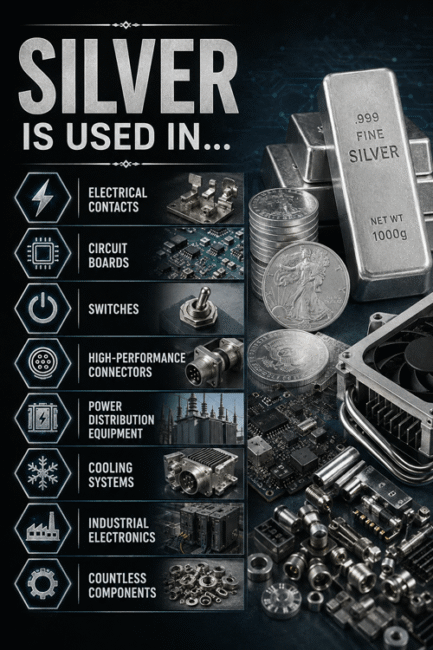 Silver’s exceptional electrical conductivity makes it valuable in:
- ✅ Solar cells
- ✅ Switches
- ✅ Circuit boards
- ✅ Contacts
- ✅ Semiconductors
- ✅ Connectors
- ✅ Cooling systems
- ✅ Batteries
- ✅ Countless components
- ✅ And a wide range of electronics
Solar power is important because new capacity installations can consume meaningful quantities of silver even as manufacturers reduce the amount used in each panel.
This creates an ongoing contest between efficiency and volume. If solar deployment expands rapidly, total silver use can rise even when each panel requires less silver than earlier designs.
If global manufacturing slows, or solar incentives weaken in key markets, industrial demand may disappoint for a period.
Electrification is another factor worth watching:
- ✅ More electric vehicles
- ✅ Charging systems
- ✅ Data centers
- ✅ Grid upgrades
- ✅ And consumer electronics generally support silver consumption
Additionally, the biggest silver demand comes from building out the AI infrastructure and the electricity it takes to power these enormous data centers.
Check out this video about how AI is creating massive new demand for gold and silver:
But these trends are not immune to economic cycles. Industrial demand is real, yet it can soften during a broad slowdown.
Mine Supply Is Slow to Respond

Opening a new mine can take years of exploration, permitting, financing, construction, and operational work. Existing mines can expand output, but ore grades may decline, and operating costs can rise.
Political instability, energy costs, labor disputes, water restrictions, and permitting delays in major mining regions can further limit supply growth.
Recycling offers some relief when prices climb. Jewelry, industrial scrap, old electronics, and photographic materials can return silver to the market.
However, recycling is not a perfect answer to a supply shortfall. Recovering small amounts of silver from complex products can be expensive, and much of the metal remains dispersed in use for years.
For these reasons, a projected market deficit should not be read as an immediate shortage of retail coins and bars. A deficit generally means annual demand exceeds newly mined and recycled supply, with above-ground inventories filling the gap.
Persistent deficits can matter over time because they reduce the cushion available to the market.
Why Investment Demand Can Change the Outlook Quickly
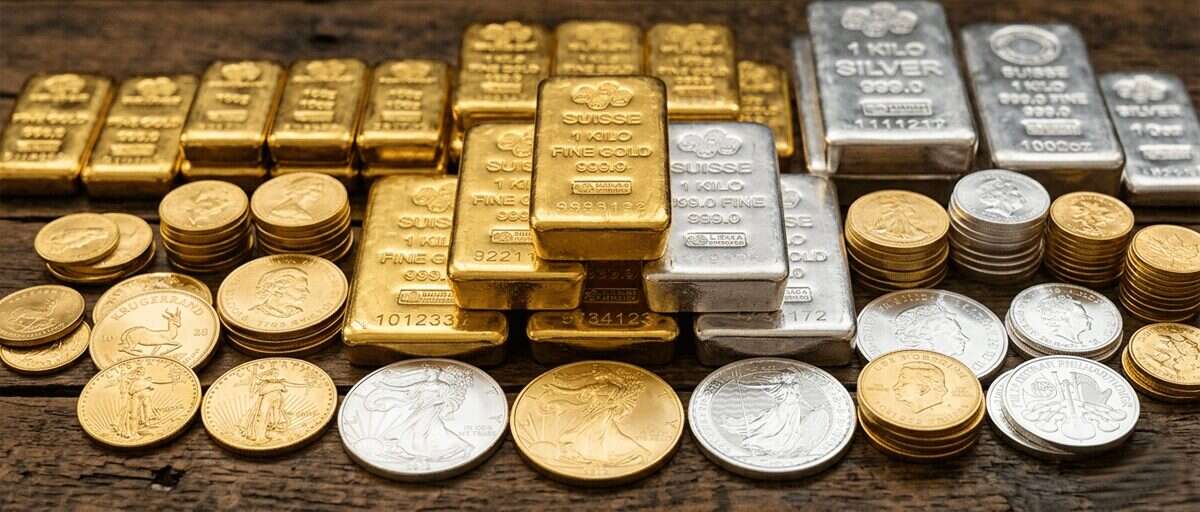 Industrial demand tends to develop gradually. Investment demand can move much faster. When inflation concerns intensify, real interest rates fall, banking stress emerges, or confidence in government debt weakens, investors often turn toward precious metals.
Gold usually receives the first wave of safe-haven interest. Silver may follow with larger percentage moves because its market is smaller and its price is lower per ounce. That potential cuts both ways.
Silver can outperform during a strong precious-metals rally, but it often experiences deeper pullbacks than gold when fear subsides, or the dollar strengthens.
An investor buying silver for retirement protection should be prepared for volatility rather than treating it like a savings account.
Physical buying also differs from buying a price-tracking fund or a futures contract. During periods of intense retail demand, premiums on popular coins and smaller bars can rise even if the quoted spot price has not moved as much.
In calmer markets, premiums can narrow. This is one reason investors should consider their full purchase cost and potential resale spread, not spot price alone.
Related:
- How to Buy Silver Bullion Without Costly Mistakes: A Beginner’s Guide
- How to Include Physical Silver in an IRA: Ultimate Silver IRA Guide
- Silver Price Prediction 2026: Why Analysts Expect Higher Prices Ahead
- Buying Silver Bullion As An Investment: Skyrocket Your Wealth!
Three Supply and Demand Outcomes Investors Should Consider
No responsible silver forecast should pretend there is one certain result. It is more useful to consider the conditions that could produce different outcomes:
✔️ 1. Soft-Demand Outcome
In a softer-demand scenario, global growth slows, industrial production weakens, the dollar remains firm, and investors prefer income-producing assets.
Silver demand from solar and electronics may still grow over the long run, but the price could struggle or move sideways. This outcome is especially possible if recycling rises and mine output proves more resilient than expected.
✔️ 2. A Balanced Scenario
In a balanced scenario, industrial growth continues at a moderate pace, supply remains constrained, and investment demand is steady but not panicked.
Silver could benefit from recurring deficits and inflation concerns, while still experiencing normal corrections. This is often the most practical case for an investor using silver as one piece of a diversified allocation.
✔️ 3. A Bullish Scenario
In a stronger bullish scenario, industrial demand exceeds expectations while mine supply disappoints and investors seek protection from currency devaluation, fiscal stress, or financial-market instability.
A tightening physical market could magnify price gains. The trade-off is that fast rallies frequently attract profit-taking and can reverse sharply.
See if you qualify for Goldco’s special promotion of 10% in FREE silver!
What a Silver Deficit Does – And Does Not – Mean
 Headlines about silver deficits can be compelling, but they need context. A deficit does not mean the world has run out of silver, nor does it mean every coin dealer will immediately have empty shelves.
Above-ground bullion inventories, exchange stocks, private holdings, and recycling all help meet demand.
What a recurring deficit may signal is that the market is drawing on stored metal instead of being fully supplied by current production and recycling.
If that condition lasts for years, the margin for error becomes smaller. A demand surge, production disruption, or wave of physical buying can then have a greater effect on price and product availability.
Investors should also separate total market demand from retail bullion demand. A solar manufacturer or hyperscale data centers may require large volumes of industrial silver, while a household investor may prefer one-ounce coins or IRA-approved bars.
The same broad market trend can affect these buyers differently, particularly when dealer premiums and fabrication capacity are tight.
How Silver Can Fit a Retirement Savings Strategy
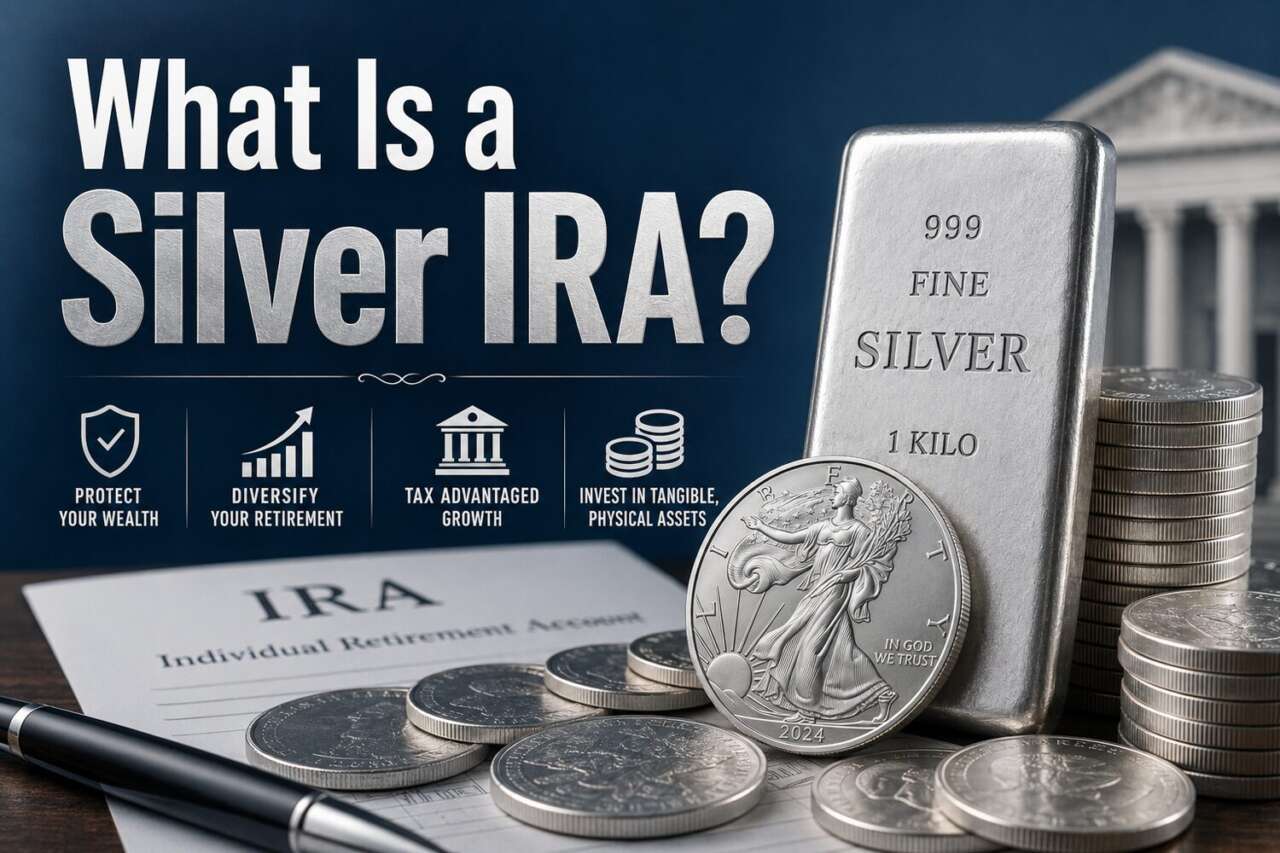 Silver can provide diversification for investors who want part of their wealth in a real asset outside the traditional financial system.
Unlike dollars, bonds, and many financial claims, physical bullion cannot be printed out of thin air or devalued in an instant by a policy decision.
That said, silver is generally better treated as a complement to gold rather than a replacement for it.
Gold is more compact, usually less volatile, and often more practical for larger retirement allocations. Silver offers a lower entry price and additional industrial upside, but it takes up more storage space and can involve higher relative premiums.
What Is a Silver IRA for Retirement Savers?
A Silver Individual Retirement Account (IRA) is essentially the same as a gold IRA or a precious metals IRA. These specialized retirement accounts allow you to hold physical assets like silver, gold, platinum, and palladium in your retirement portfolio.
Unlike traditional IRAs, which typically include investments in stocks, bonds, and mutual funds, a silver IRA is a self-directed account that allows you to hold tangible assets such as silver, gold, platinum, and palladium.
For a Precious Metals IRA, investors should confirm that the silver meets IRS purity standards and is held by an approved custodian and qualified depository.
Personal home storage is not the standard arrangement for IRA-owned bullion and can create serious compliance concerns. Because silver is bulky, storage and account fees deserve special attention before opening or funding an account.
A rollover from a 401(k), traditional IRA, TSP, or similar account should be handled carefully to avoid an unnecessary taxable distribution.
The goal is not to move every retirement dollar into metals. It is to build a measured allocation that can help protect purchasing power while leaving room for liquidity, income needs, and other investments.
Related:
- How to Start a Silver IRA in 3 Simple Steps
- Gold IRA Rules: How To Protect Your Retirement With Precious Metals
- Gold IRA Tax Rules: The Ultimate Gold IRA Tax Guide
- Gold IRA FAQ: Everything You Need To Know About Gold IRAs
Silver Price Predictions for 2026
But where are silver prices heading? Let’s move on to what seven major financial institutions predict for silver in 2026. You can either watch the video or continue reading the text below:
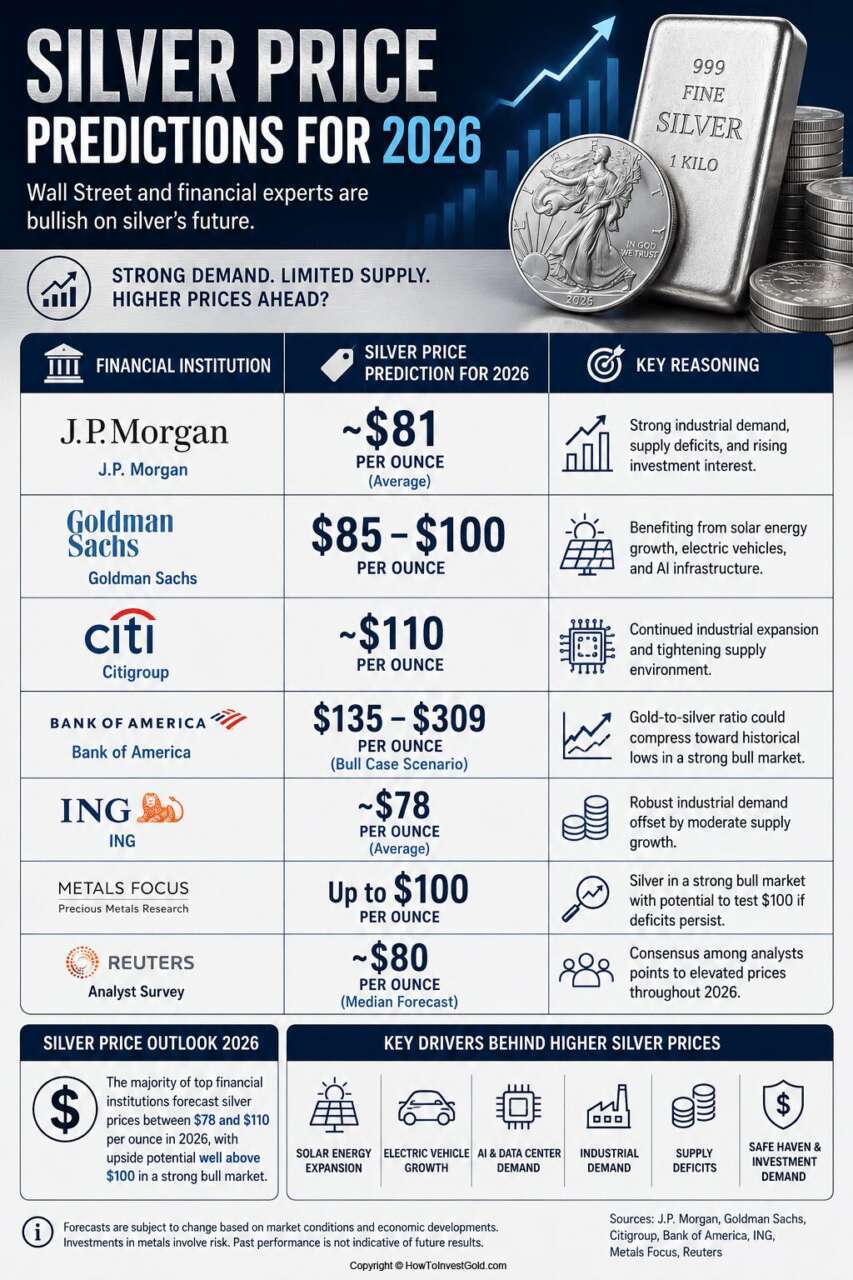
Several of the world’s largest financial institutions have issued bullish forecasts for silver prices. Here are silver price predictions from seven major financial institutions:
1. J.P. Morgan
J.P. Morgan analysts have projected silver could average approximately $81 per ounce during 2026. The bank cites strong industrial demand, ongoing supply deficits, and growing investor interest as primary catalysts.
2. Goldman Sachs
Goldman Sachs remains constructive on silver’s long-term prospects. Various market reports suggest the firm sees silver potentially trading between $85 and $100 per ounce, driven by growing demand from solar energy, electric vehicles, and AI-related infrastructure.
3. Citigroup
Citigroup analysts have projected silver could reach approximately $110 per ounce if industrial demand remains strong and investment flows continue increasing.
4. Bank of America
Among major financial institutions, Bank of America has issued one of the most aggressive forecasts. The bank’s commodity strategists have outlined a bullish scenario in which silver could potentially trade between $135 and $309 per ounce if precious metals enter a major bull market and the gold-to-silver ratio compresses toward historical norms.
5. ING
ING analysts forecast silver averaging around $78 per ounce, supported by robust industrial consumption and constrained mine supply.
6. Metals Focus
The precious metals research firm Metals Focus believes silver could potentially test $100 per ounce if market deficits persist and investment demand accelerates.
7. Reuters
Reuters’ latest survey of precious metals analysts paints a bullish picture for silver over the coming years. According to the survey, the median forecast among leading commodity experts suggests silver prices could average around $80 per ounce in 2026, representing significant upside from historical averages.
Signals to Watch Before Buying Silver
A better forecast comes from monitoring the market rather than reacting to a single prediction. The following signals can help investors assess whether the silver case is strengthening or weakening:
- ☑️ Annual mine production and whether new supply is actually offsetting declining ore grades or disruptions
- ☑️ Solar installations, the AI boom, industrial manufacturing activity, and evidence that silver thrift or substitution is accelerating
- ☑️ Reported market deficits or surpluses, along with changes in known above-ground inventories
- ☑️ U.S. real interest rates, dollar strength, inflation expectations, and financial stress indicators that influence investment demand
- ☑️ Retail bullion premiums and product availability, which can reveal physical-market pressure that a spot chart does not show
The most useful approach is patient and disciplined. Before making a purchase or an IRA rollover, compare product premiums, storage arrangements, provider reputation, buyback policies, and total annual costs.
Silver’s long-term supply and demand picture may be compelling, but the right decision is the one that protects your retirement plan without asking you to chase a headline.
Silver Supply and Demand: FAQ
What factors drive the central forecast for silver supply and demand?
The central forecast for silver through 2026 and beyond weighs steady industrial demand against a supply base that’s slow to expand. Prices can move due to the U.S. dollar, interest rates, recession risk, investor sentiment, and futures-market activity, even if the fundamental balance remains tight.
Why can silver be more volatile than gold?
Silver combines industrial demand with investment demand, and its market is smaller, so shifts in investment sentiment or changes in industrial use can produce larger percentage moves than gold, which tends to be more compact and less volatile.
How does investment demand influence silver’s outlook?
Investment demand can move quickly in response to inflation concerns, real interest rates, banking stress, or confidence in government debt. When these factors push investors toward precious metals, silver can rise, sometimes more sharply than gold, but it can also fall back as fear subsides or the dollar strengthens.
What limits mine supply and how does recycling affect the market?
Opening new mines takes years and ore grades may decline, while political, energy, labor, water, and permitting issues can cap supply growth. Recycling helps by returning silver from jewelry, electronics, and other sources, but it is not a perfect fix because recovering small amounts from complex products can be expensive and much metal remains in use for years.
How can silver fit into a retirement strategy and what should investors watch for?
Silver can diversify a retirement portfolio as a real asset outside the traditional financial system, but it is generally best as a complement to gold. Investors should consider IRS purity, custody and depository requirements for IRAs, and account for storage and premiums.
Monitor signals such as mine production, solar and AI-related demand, deficits or surpluses, real rates, dollar strength, premiums, and total costs before buying.
See if you qualify for Goldco’s special promotion of 10% in FREE silver!