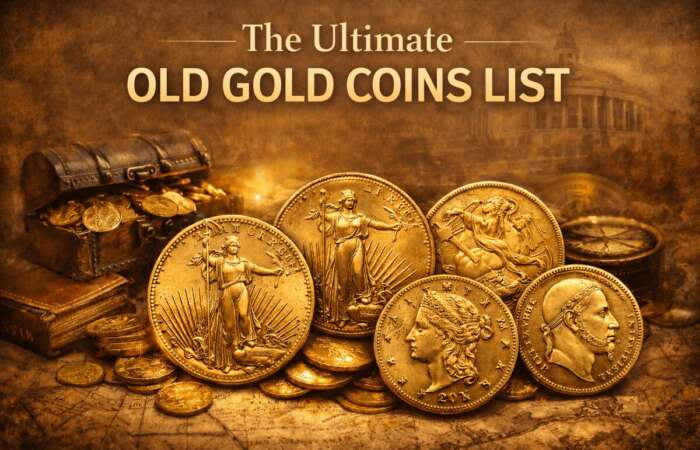
That distinction matters. A Gold IRA can offer tax-advantaged exposure to physical precious metals that cannot be printed out of thin air or devalued overnight.
Yet one non-qualifying coin can create a taxable distribution, potentially adding taxes and penalties to a retirement strategy built for long-term security.
In this article, we’ll answer the question of whether collectible and numismatic coins are allowed in a Gold IRA and help guide you to IRS-approved options to avoid penalty risk.
Let’s get straight to the point!
Are Collectible Coins Allowed in a Gold or Precious Metals IRA?
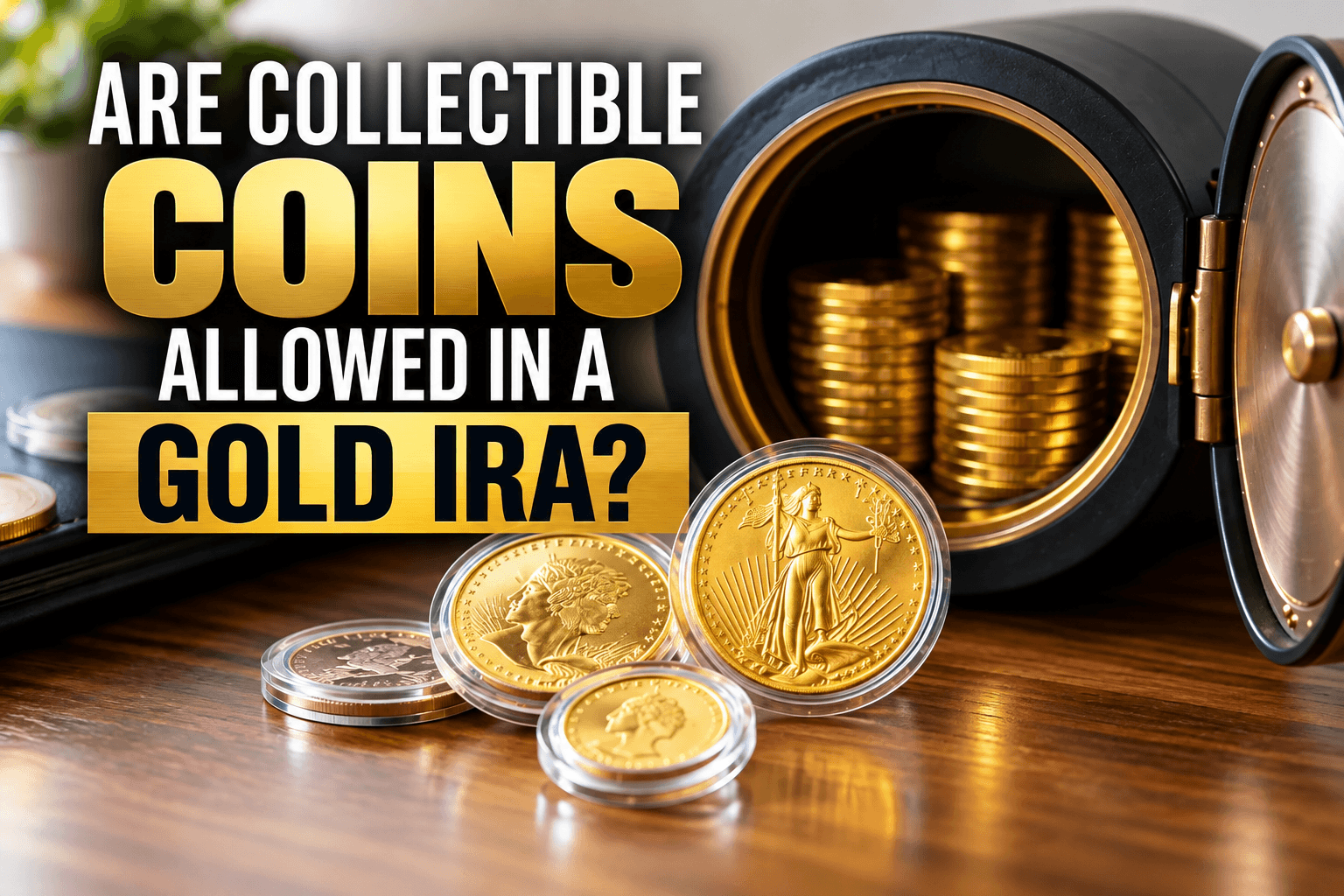
Most collectible coins are not allowed in a Gold IRA. Under Internal Revenue Code Section 408(m), IRAs cannot invest in collectibles, including most coins, metals, artwork, antiques, stamps, and similar tangible property.
The rule is designed to prevent retirement accounts from holding assets valued mainly for personal enjoyment, rarity, historical significance, or speculation.
A coin’s age, limited mintage, unusual grade, or famous historical story may make it appealing to collectors, but those same qualities often make it unsuitable for an IRA.
There is an important exception: certain coins specifically permitted under federal law can be held in an IRA. Certain qualifying bullion bars and rounds can also be eligible when they meet required purity standards and are held by an approved trustee or custodian.
The practical takeaway is simple: do not assume a gold or silver coin qualifies just because it is made of precious metal. Eligibility depends on the specific product, its legal status, purity, and storage arrangement.
 Request a FREE Gold & Silver Guide
Common IRA-Approved Coins
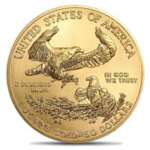 The best-known IRA-eligible coins are American Eagle bullion coins. Gold, silver, platinum, and palladium American Eagles are commonly used in self-directed Precious Metals IRAs.
 American Buffalo gold coins also generally qualify, as do certain other coins that meet the statutory exception and are accepted by the IRA custodian.
Many investors choose American Eagles because they are widely recognized, easy to verify, and supported by an established resale market.
Their government backing can provide additional confidence for retirement savers who want physical metals without relying solely on a private mint.
Qualifying bullion is another route. Gold generally must meet a minimum fineness of .995, silver .999, platinum .9995, and palladium .9995.
Eligible bullion must be held by the IRA trustee, typically through an approved depository. You cannot buy qualifying bars with IRA funds and store them in a home safe, bank box, or personal vault.
Even when a product appears to meet IRS standards, custodians may maintain their own approved-product lists. That is why it is wise to confirm eligibility before funds are sent, not after a dealer has prepared an order.
The Difference Between Bullion and Numismatic
Bullion coins are valued primarily for their precious-metal content and the current market price of gold, silver, platinum, or palladium.
Numismatic coins derive a larger share of their value from rarity, condition, age, demand among collectors, historical interest, and grading.
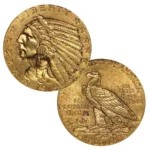 Numismatic coins derive a larger share of their value from rarity, condition, age, demand among collectors, historical interest, and grading.
A modern American Gold Eagle proof coin, for example, may be IRA-eligible in many cases, but it can carry a higher premium than its bullion counterpart.
A high premium is not automatically a tax-rule problem. It is, however, an investment consideration. The more you pay above the metal value, the more metal prices may need to rise before you break even on resale.
For a retirement account focused on diversification and wealth preservation, lower-premium bullion products are often easier to evaluate.
This does not mean collectible coins have no place in a personal portfolio. It means the goals and rules are different inside an IRA.
Coins Usually Not Allowed in a Gold or Precious Metals IRA
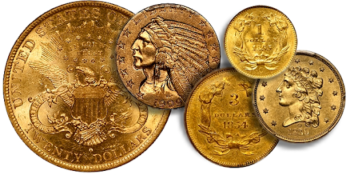 Most rare and collectible coins should be treated as prohibited until a qualified custodian confirms otherwise. This often includes:
- Pre-1933 U.S. gold coins
- Rare date coins
- Graded numismatic coins
- Commemoratives with substantial collector premiums
- Foreign rarity coins
- And coins promoted mainly for their historical importance
Pre-1933 gold coins deserve special attention. They can be beautiful pieces of American history, and some investors buy them outside retirement accounts as tangible collectibles.
But their eligibility for an IRA is often limited or problematic because their value is usually driven by numismatic factors rather than bullion content alone.
Marketing can make the line harder to see. A sales presentation may emphasize that a coin contains gold, was produced by a government mint, or has performed well historically.
Those facts do not, by themselves, establish IRA eligibility. Nor do they prove the product is appropriate for a retirement account.
A disciplined investor asks two separate questions: Is this coin permitted in my IRA? And, even if it is permitted, does its premium and resale profile fit my retirement plan?
Related:
- IRA Transfer Versus Rollover: Which Is Safer?
- 401(k) to Gold IRA Rollover Without Penalty: Rules and Steps
- TSP to Gold IRA Transfer Rules: Traditional vs Roth and Direct Rollovers
What Happens If an IRA Buys a Prohibited Collectible?
If an IRA acquires a collectible that does not meet an exception, the IRS may treat the amount invested as distributed to the account owner in the year of purchase. That can make the purchase taxable as ordinary income.
If you are under age 59 1/2, the transaction could also trigger a 10% early-distribution penalty unless an exception applies. State taxes may add to the cost.
The financial damage can be far greater than the value of any perceived bargain or collector opportunity.
There is another risk: improper possession. Precious metals held in an IRA must generally remain under the control of the qualified trustee or custodian.
Taking personal delivery of IRA metals, arranging home storage, or using the metals for personal benefit can create serious tax concerns. The point of a self-directed IRA is greater investment choice, not the ability to bypass custody rules.
How to Choose IRA-Approved Coins With Confidence
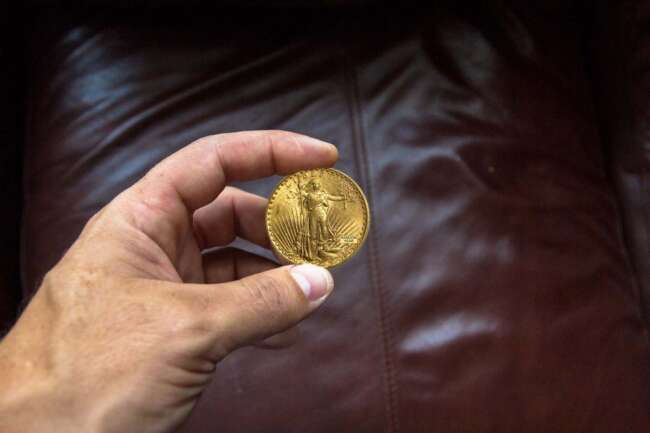
Before rolling over a 401(k), Traditional IRA, TSP, or other eligible retirement account into a Gold IRA, establish the account with a reputable self-directed IRA custodian.
The Gold IRA company or custodian and metals dealer should be able to identify which coins and bars are approved for the account and arrange shipment to a qualified depository.
Ask for the exact product name, weight, purity, and total price before approving a transaction. You should also understand:
- The dealer premium
- Custodian fees
- Storage fees
- Buyback policies
- And whether the metals will be stored on an allocated or segregated basis
These details affect the real cost of ownership and your ability to sell efficiently later. A reputable Gold IRA company provider should be willing to explain why a recommended coin fits an IRA.
Be cautious if a representative relies on fear, pressures you to buy immediately, or pushes expensive rare coins without clearly discussing premiums and IRS restrictions.
Gold and silver can help diversify a retirement portfolio, but urgency should never replace due diligence.
For many first-time investors, a straightforward mix of widely traded IRA-eligible bullion coins or bars is easier to understand than a portfolio built around specialty products.
Investors seeking a more specialized strategy may still consider permitted proof or premium coins, but they should compare the added cost against the potential benefit.
Request a FREE Gold & Silver Guide
Should You Buy Collectible Coins Outside an IRA?
Collectible coins can make sense outside an IRA for buyers who genuinely enjoy numismatics, understand grading and authenticity, and can accept a less predictable resale market.
They may also appeal to those building a family collection or seeking historically significant tangible assets.
But collectible coins should not be confused with a simple inflation hedge. Their performance can depend on collector demand, auction activity, rarity trends, condition disputes, and dealer spreads.
Gold bullion, by comparison, has a more direct relationship to the underlying price of gold and is generally easier for a retirement investor to price.
Some investors choose both: IRA-approved bullion for tax-advantaged retirement diversification and a separately funded collection of rare coins they own personally.
Keeping those purposes separate helps preserve the tax integrity of the IRA while giving you freedom to collect what you value.
A Better Standard for Retirement Precious Metals
The question is not merely whether a coin is attractive or potentially valuable. The better question is whether it strengthens your long-term retirement position without creating unnecessary tax, storage, or liquidity risk.
When retirement assets are meant to protect purchasing power through inflation, market volatility, and currency uncertainty, clarity has value.
Favor products your custodian confirms as eligible, understand every premium and fee, and keep collectible enthusiasm separate from the disciplined role precious metals can play in protecting a family’s financial future.
Related:
- How to Start a Gold IRA in 3 Simple Steps
- 8 Gold IRA Scam Warning Signs Before You Buy
- Gold IRA Tax Rules: The Ultimate Gold IRA Tax Guide
Collectible Coins: FAQ
Are collectible coins allowed in a Gold IRA?
Most collectible coins are not allowed in a Gold IRA. Under Internal Revenue Code Section 408(m), IRAs cannot invest in collectibles, including most coins, metals, artwork, antiques, stamps, and similar tangible property.
Some coins that meet a statutory exception may be eligible, but eligibility depends on the product, its legal status, purity, and storage arrangement, and a qualified custodian must hold the assets.
What is the difference between bullion and numismatic coins for an IRA?
Bullion coins are valued primarily for their precious-metal content and current metal prices, while numismatic coins derive significant value from rarity, condition, age, and collector demand.
In an IRA, bullion is generally preferred for simplicity and predictability, whereas many numismatic coins carry higher premiums not automatically disqualifying but requiring careful consideration of how premiums affect future value.
What happens if a prohibited collectible is bought in an IRA?
If an IRA acquires a collectible that does not meet an exception, the amount invested may be treated as a distribution to the account owner in the year of purchase, making it taxable as ordinary income.
If you are under 59 1/2, it could trigger a 10% early-distribution penalty unless an exception applies, and state taxes may apply as well. Custody rules also require the metals to stay under the custodian’s control to avoid tax issues.
How should I choose IRA-approved coins with confidence?
Before rolling over into a Gold IRA, establish the account with a reputable self-directed custodian who can identify which coins and bars are approved, arrange storage in a qualified depository, and provide exact product details.
Ask for the:
- Product name
- Weight
- Purity
- Total price
- Dealer premium
- Custodian and storage fees
- Buyback policies
- And whether storage is allocated or segregated, ensuring the purchase aligns with IRS rules
Should I buy collectible coins outside an IRA?
Collectible coins can make sense outside an IRA if you genuinely enjoy numismatics and understand grading and authenticity, accepting a less predictable resale market. They should not be confused with an inflation hedge, as performance depends on collector demand and market factors.
Many investors use a mix of IRA-approved bullion for retirement diversification and a separately funded personal collection for collectibles.
Request a FREE Gold & Silver Guide