A gold or silver purchase should strengthen your financial security, not expose your retirement savings to unnecessary risk.
Avoiding precious metals scams starts with recognizing a simple truth: legitimate bullion dealers welcome careful questions, provide clear documentation, and never need to rush you into moving money.In this article, we’ll show you how to avoid precious metals and Gold IRA scams in 9 steps to help you avoid costly mistakes.
Let’s begin by taking a look at why precious metals buyers are targeted.
Why Precious Metals Buyers Are Targeted so Often
 Physical gold and silver can serve as a store of value outside the financial system – assets that cannot be printed out of thin air or devalued in an instant.
But the same uncertainty that sends investors toward safe haven assets can also create an opening for high-pressure marketers, misleading promotions, and outright fraud.
Whether you are buying coins for home delivery or rolling retirement funds into a Gold IRA, a disciplined process can protect both your assets and your peace of mind.
Precious metals are tangible, widely recognized, and often purchased when investors are worried about:
- ☑️ Inflation
- ☑️ Market volatility
- ☑️ Bank stability
- ☑️ Or geopolitical events
That makes the market attractive to ethical dealers and unscrupulous operators alike.
Scams do not always look like fake bars or counterfeit coins. Some involve overpriced collectible coins sold as “exclusive” retirement investments.
Others use a low advertised price to get you on the phone, then steer you toward products with far higher markups.
A fraudster may claim that a government program is ending tomorrow, that a particular coin is guaranteed to soar, or that you can personally store IRA metals at home without consequences.
The most effective defense is not trying to predict every dishonest pitch. It is slowing down long enough to verify the company, the product, the price, and the storage arrangement before funds leave your account.
How to Avoid Precious Metals & Gold IRA Scams Before You Buy

With the “whys” in mind, here are 9 steps on how to avoid precious metals and Gold IRA scams:
1. Treat Urgency as a Warning Sign
Gold and silver prices can move quickly, but a legitimate investment decision rarely has to be made during one phone call.
Be cautious when a representative insists that a promotion, tax opportunity, inventory allocation, or price is available only if you wire money immediately.
A reputable company can explain its offer in writing and give you reasonable time to read it. There can be legitimate inventory constraints during periods of heavy demand, but pressure should never replace due diligence.
If the conversation leaves you feeling hurried or confused, pause it.
2. Verify the Dealer Beyond Its Own Website
A polished website, a celebrity endorsement, or a strong sales presentation is not proof of trustworthiness.
Research the company through independent reputation sources, including:
- ☑️ The Better Business Bureau
- ☑️ Business Consumer Alliance
- ☑️ Trustpilot
- ☑️ TrustLink
- ☑️ And consumer complaint database
Read the substance of reviews, not only the average score. Look for patterns. A single unhappy customer does not automatically make a dealer unsafe, especially when precious metals prices fluctuate after a purchase.
For example, pay attention to:
- ✅ Repeated complaints about delayed delivery
- ✅ Unreturned calls
- ✅ Undisclosed fees
- ✅ Aggressive sales tactics
- ✅ Or difficulty selling products back
Also confirm basic business information: how long the company has operated, where it is located, how to reach customer support, and whether its policies are readily available.
If you cannot get straightforward answers before becoming a client, do not expect better communication after payment.
Learn how to avoid Gold IRA scams, request a 👉 Free Gold IRA Dealer Lies Guide!
3. Ask Exactly What You Are Buying
“Gold” is not a complete product description. Before agreeing to any purchase, obtain the:
- ☑️ Metal type
- ☑️ Purity level
- ☑️ Weight
- ☑️ Quantity
- ☑️ Mint or refiner
- ☑️ And whether the item is bullion, a semi-numismatic coin, or a collectible
Ask for the total price and the price per ounce.
Bullion products generally trade closer to the spot price of the metal, plus a dealer premium. Premiums vary based on product availability, manufacturing costs, order size, and market demand.
A premium above spot is not automatically a scam. The concern is a seller who will not clearly explain the premium or who switches you from the product you requested into high-markup products without giving you comparable options.
For investors focused on wealth preservation, common bullion coins and bars are often easier to price and compare than obscure collectible products.
Collectibles may be appropriate for knowledgeable buyers with a genuine interest in numismatics, but they should not be presented as a guaranteed path to retirement gains.
4. Never Accept Guaranteed Returns
No dealer, newsletter publisher, or television advertiser can guarantee where gold or silver prices will go next month or next decade.
Precious metals may help diversify a portfolio and preserve purchasing power during periods of currency weakness or market stress, but they still experience price volatility.
Claims that a coin will “double,” that a government revaluation is certain, or that a product has no downside should end the conversation.
Honest professionals discuss potential benefits and risks. They do not promise profits or use fear as a substitute for a sound allocation strategy.
Related:
- 8 Gold IRA Scam Warning Signs Before You Buy
- 401(k) to Gold IRA Rollover Without Penalty: Rules and Steps
- TSP to Gold IRA Transfer Rules: Traditional vs Roth and Direct Rollovers
Gold IRA Scams Require Extra Attention From Investors
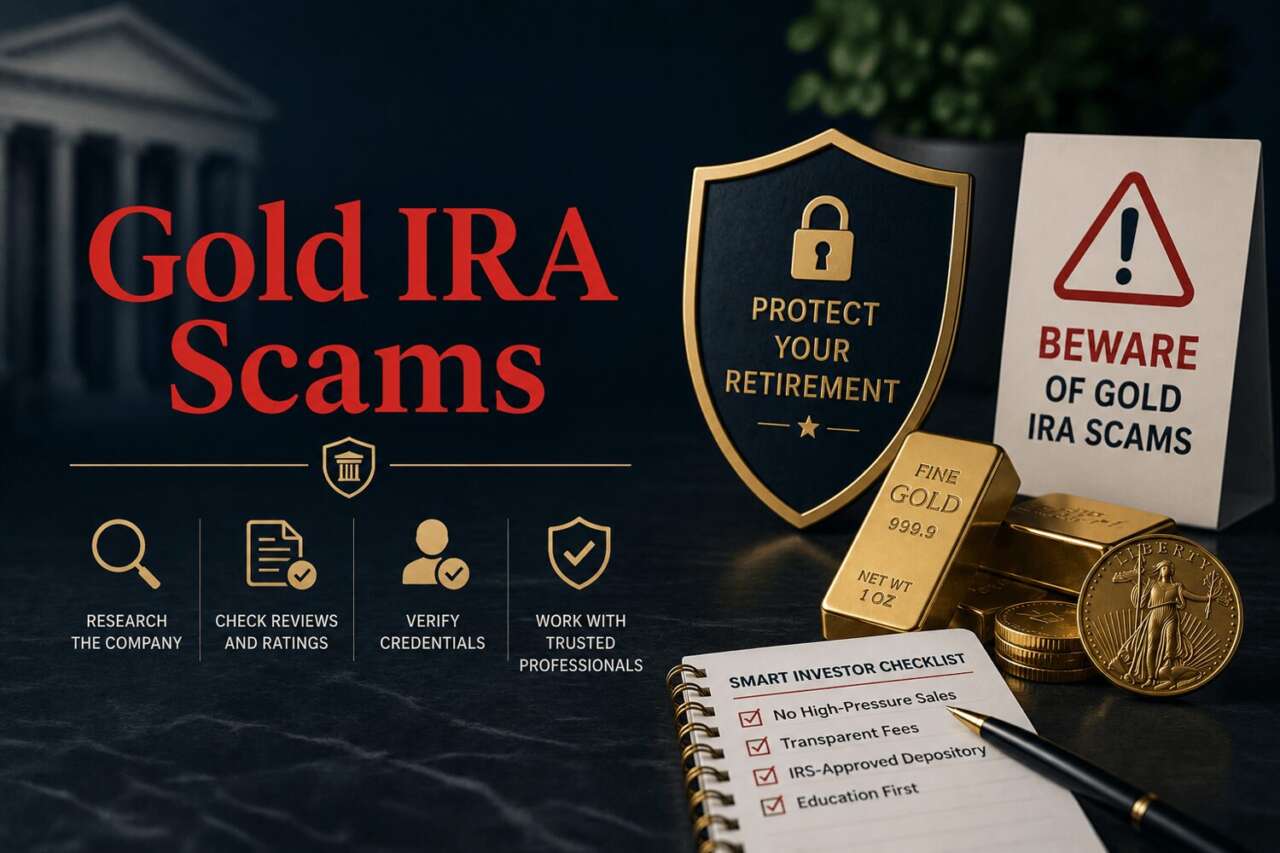
A Gold IRA can allow eligible retirement funds to hold qualifying physical bullion in a tax-advantaged account.
It also requires a more structured arrangement than an ordinary cash purchase. That structure is a protection when it is handled correctly.
5. Understand Who Does What in a Gold IRA
In a properly organized Precious Metals IRA, the account owner works with an IRS-approved custodian or trustee, a metals dealer, and an approved depository.
In some cases, one provider coordinates several parts of the process, but each role should be clear.
The custodian administers the IRA and required reporting. The depository stores the IRA-owned metals. The dealer supplies the products.
Ask for the names of the actual custodian and storage facility, not just the brand name of the sales company. Review the account agreement, storage terms, annual fees, transaction fees, and liquidation process before funding the account.
Be especially skeptical of any pitch suggesting you can take personal possession of IRA metals while preserving the account’s tax advantages.
Home-storage IRA claims are often oversimplified at best and may create serious tax problems. IRA assets generally must remain under the custody and storage arrangements required for the account.
6. Confirm IRA Eligibility Before Ordering Metals
Not every gold, silver, platinum, or palladium product qualifies for an IRA. Eligible products must meet IRS fineness standards and other requirements, with limited exceptions for certain government-minted coins.
A reliable provider should identify the specific IRA-approved products being offered and explain why they qualify.
Do not assume that a rare coin, jewelry, proof set, or personal collection can simply be placed into a retirement account. If a representative brushes aside eligibility questions, that is a major concern.
The wrong asset in the wrong account can create avoidable compliance issues.
7. Protect Your Rollover From Avoidable Mistakes
Many scams begin with a misleading claim that you must liquidate everything immediately or that the company can “take over” your existing 401(k), TSP, or IRA.
Remember that you retain control over whether to diversify and how much to allocate. For many investors, a direct trustee-to-trustee transfer or direct rollover is cleaner than receiving retirement funds personally.
The right method depends on your current account type and plan rules. Get the process in writing, keep records of every form and transaction, and consider speaking with a qualified tax professional when the details are unclear.
No honest provider should discourage you from asking your plan administrator, custodian, or tax adviser to verify the transaction.
Learn how to avoid Gold IRA scams, request a 👉 Free Gold IRA Dealer Lies Guide!
Verify Payment, Delivery, and Storage
8. Use Payment Methods With a Clear Paper Trail
Wire transfers are common in larger precious metals transactions, but they are difficult to reverse once sent.
Before wiring funds, independently confirm the recipient details using a trusted contact method. Do not rely solely on an email that could have been spoofed or altered.
Be wary of requests for payment through cryptocurrency, gift cards, peer-to-peer payment apps, or an account held in a person’s name rather than the company’s name.
Save invoices, trade confirmations, receipts, shipping notices, and all correspondence. Documentation matters if a delivery issue or dispute arises later.
9. Know Where Your Metals Will Be Stored
For metals shipped to your home, ask about:
- ☑️ Insured shipping
- ☑️ Signature requirements
- ☑️ Tracking
- ☑️ Delivery timeframes
- ☑️ And the procedure for reporting a missing package
Inspect the shipment promptly and retain all paperwork. For depository storage, determine whether:
- ✅ The metals are segregated or non-segregated
- ✅ What insurance applies
- ✅ How holdings are reported
- ✅ And how you would sell or take a qualified distribution in the future
Segregated storage typically assigns specific bars or coins to your account, while non-segregated storage records your ownership of a stated amount and type of metal within pooled inventory.
Neither option is universally better. Cost, product type, and your preference for specific holdings all matter.
Related:
- How to Start a Gold IRA in 3 Simple Steps
- Gold Demand and Supply: 4 Key Forces Behind Price Swings
- Silver Supply and Demand Forecast Into 2026—What to Know
A Calm Process Is Your Best Protection

A trustworthy precious metals purchase should remain understandable from the first conversation through delivery or storage. You should know what you own, what you paid, where it is held, what ongoing fees apply, and how you could sell it later.
Before committing retirement funds or savings, compare more than one provider, request written pricing, and take time to read every agreement.
Gold and silver can play a meaningful role in protecting long-term purchasing power, but the value of that protection depends on buying with clear information rather than fear.
The best next step is simply to ask one more question than the salesperson expects – and wait for an answer you can verify.
Let’s now move on to our list of reputable precious metals and Gold IRA companies for a safe investment.
Reputable Precious Metals & Gold IRA Companies to Buy From
There are reputable gold IRA companies that have been serving Americans for over a decade and helping them protect and secure their hard-earned retirement savings.
We have vetted and rated the best gold IRA companies in the industry to help you identify the best option to protect and grow your wealth today. Each gold IRA company is rated based on a variety of factors, including BBB/BCA ratings and complaints, customer reviews, annual fees, precious metals selection, storage options, promotions, and buy-back programs.
You can click on the “GET FREE KIT!” button to request a free kit on gold and silver investments from each firm (shipping is included).
>
| Company | Reviews | Annual Fees | Investment Minimums (IRA) | Preferred Custodian | Free Gold Kit |
 |
 |
$180 | $10,000 | Equity Trust |  |
 |
 |
$180 | $25,000 | Entrust | |
 |
 |
$0 | $25,000 | Equity Trust | |
 |
|
$75-$300 | $10,000 | GoldStar Trust Company | |
 |
 |
$200 | $50,000 | Equity Trust | |
 |
 |
$250 | $20,000 | Equity Trust | |
 |
 |
$250 | $10,000 | Equity Trust | |
 |
 |
$48 | $0 | Various | |
How to Avoid Precious Metals & Gold IRA Scams: FAQ
How can I avoid precious metals and Gold IRA scams?
Slow down and verify the company, the product, the price, and the storage arrangement before funds leave your account. A legitimate dealer will welcome careful questions, provide written information, and not rush you into a decision.
What should I do to verify a dealer beyond their own website?
Research the company through independent sources such as:
- The Better Business Bureau
- Business Consumer Alliance
- Trustpilot
- TrustLink
- Google reviews
- And consumer complaint databases
Look for patterns like delayed delivery, unreturned calls, undisclosed fees, aggressive sales, or difficulty selling back.
What exact details should I ask for when buying metals?
Ask for the metal type, purity, weight, quantity, mint or refiner, and whether the item is bullion, a semi-numismatic coin, or a collectible. Also request the total price and the price per ounce.
Can a dealer guarantee returns on gold or silver investments?
No. Honest professionals discuss risks and potential benefits but do not promise profits or guarantee that prices will rise. Any claim of no downside or guaranteed returns should be treated as a red flag.
How should I handle storage and IRA considerations to protect my investment?
Understand who does what in a Gold IRA, confirm the custodian and storage facility, review fees and the liquidation process, and ensure eligible IRA products meet IRS standards. Also verify your storage choice (segregated or non-segregated) and confirm that you retain control and appropriate tax protections.
Learn how to avoid Gold IRA scams, request a 👉 Free Gold IRA Dealer Lies Guide!