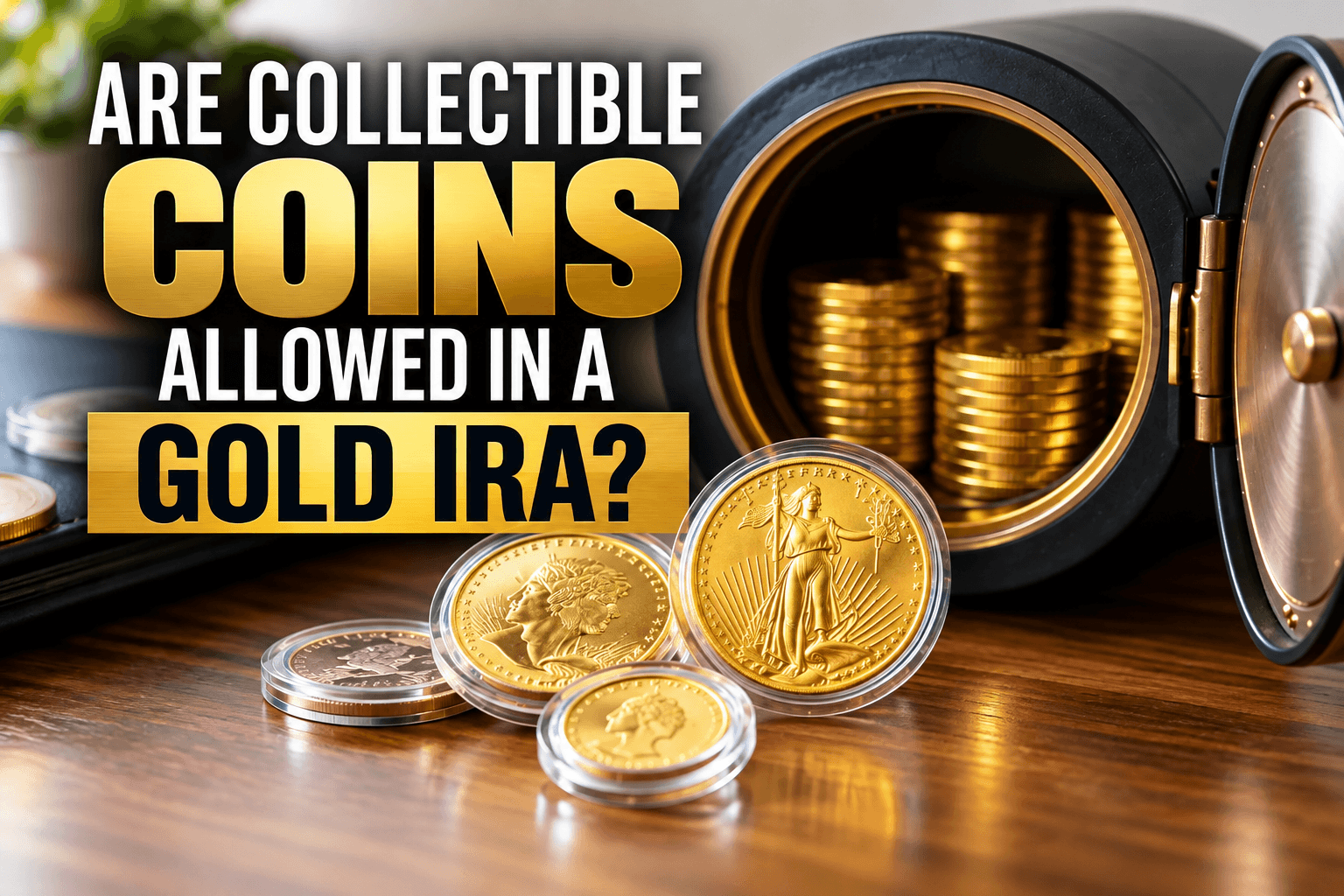
Gold has endured because it is tangible, scarce, and cannot be printed out of thin air. But not every gold coin is purchased primarily for its metal content. Bullion is priced largely around the current gold spot price.
Numismatic coins derive part of their value from rarity, condition, age, historical importance, and collector demand. Neither category is automatically wrong. They simply serve different purposes.
In this article, we’ll cover gold bullion versus numismatic coins, their core differences, and which are better for your investment. We’ll also explain which coins are appropriate for a Gold IRA.
Let’s begin by taking a look at the difference between gold bullion and numismatic coins.
Gold Bullion Versus Numismatic Coins: The Core Difference
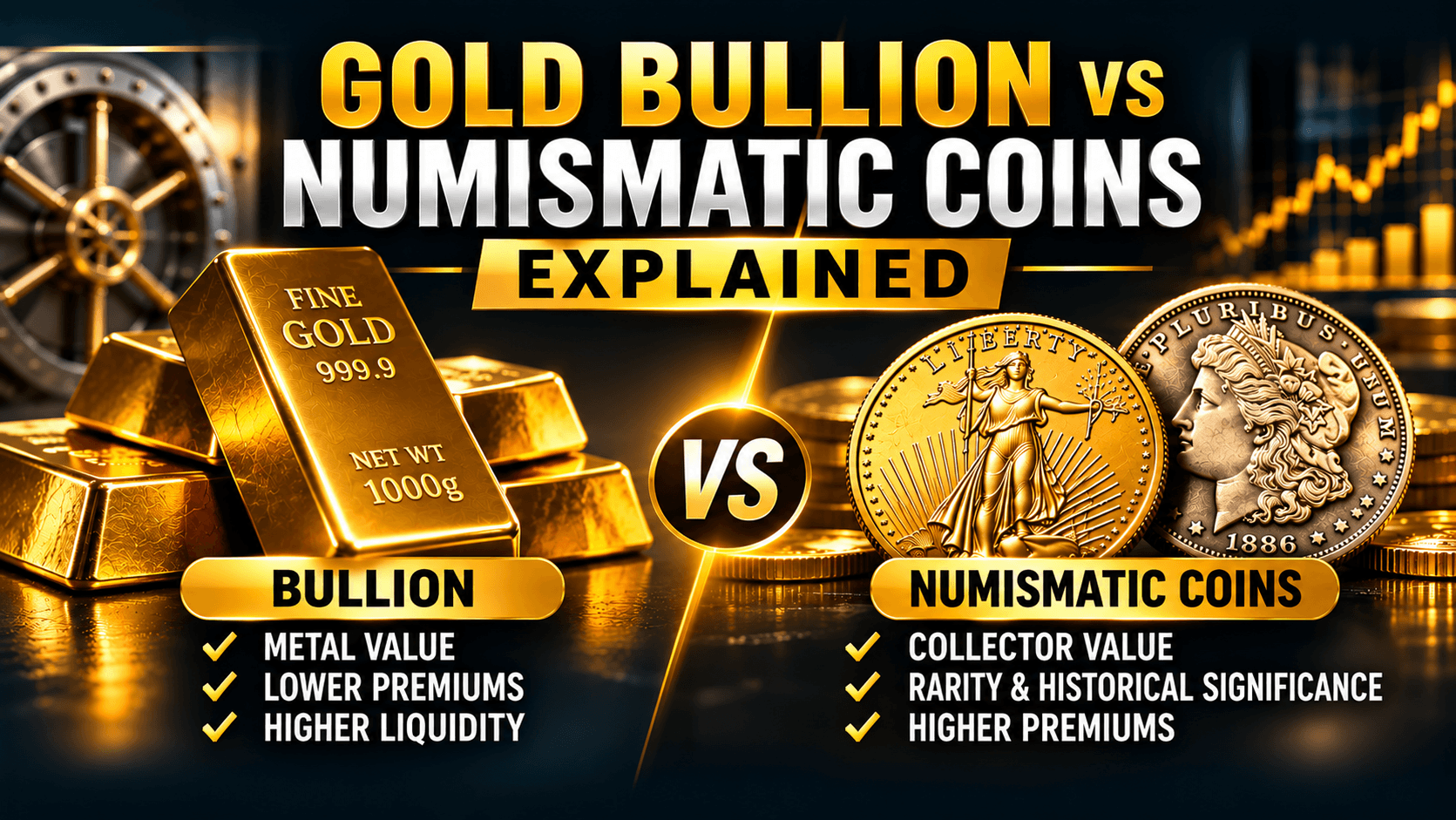
Gold bullion is investment-grade gold sold for its weight and purity. Common examples include:
- ✔️
 American Gold Eagles
- ✔️ American Gold Buffalos
- ✔️ Canadian Gold Maple Leafs
- ✔️ And gold bars from recognized refiners
 American Gold Eagles
When investors discuss buying gold to protect purchasing power, diversify beyond paper assets, or add physical metal to retirement savings, bullion is usually what they mean.
Its value closely follows the underlying price of gold, plus a dealer premium. If gold rises, bullion generally rises with it. If gold falls, bullion generally falls with it.
The math is relatively transparent: determine the coin or bar’s gold content, compare it with the live spot price, then account for the premium and the dealer’s buyback spread.
Numismatic coins are collectible coins. Their gold content still matters, but it is only one part of the valuation.
A rare pre-1933 U.S. gold coin, for example, may command a substantial premium over its melt value because collectors want a particular date, mint mark, grade, or historical issue.
That added value can create opportunity, but it also adds uncertainty. A coin may be beautiful, old, and gold, yet still be difficult to resell at the premium paid if collector demand changes or the coin was priced aggressively at purchase.
 Claim your FREE Gold & Silver Info Guide to learn how to protect your retirement savings with a Gold IRA!

Why Bullion Usually Fits a Wealth-Preservation Strategy
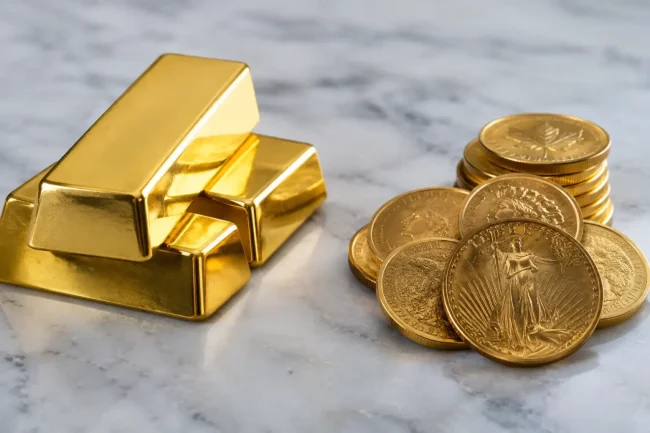 For investors focused on retirement security, bullion offers a direct and understandable relationship to gold itself.
You are not making a separate bet on a coin market, a grading opinion, or the preferences of future collectors. You are purchasing recognized precious metal with a known weight and purity.
That direct exposure matters during periods of inflation, currency weakness, banking concerns, or market volatility.
Physical bullion is commonly held as a long-term diversification asset, not as a short-term trading vehicle. It can stand outside much of the financial system and provide a measure of confidence when stocks, bonds, and cash are under pressure.
Bullion also tends to be more liquid. Widely recognized coins and bars have established dealer markets, and buyers can quickly evaluate them by weight, purity, and condition.

American Gold Eagles are especially familiar to U.S. buyers, while bars may offer lower premiums per ounce for investors making larger purchases.
Lower premiums are another major consideration. Every dollar paid above gold’s intrinsic value creates ground an investor must recover when selling.
Bullion premiums vary according to product availability, denomination, market demand, and purchase size, but they are usually easier to compare than premiums on collectible coins.
This does not mean the lowest-priced product is always best. Small bars and fractional coins can be useful for investors who value flexibility.
Larger bars can reduce premium costs but may be less convenient if you later want to sell only part of your holdings. A balanced purchase plan considers both acquisition cost and eventual liquidity.
The Appeal and Risks of Numismatic Coins for Investment
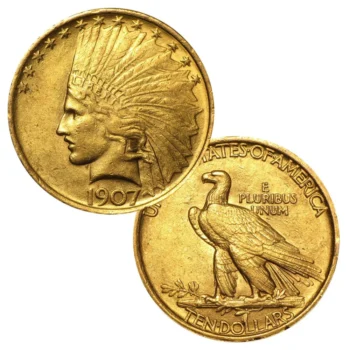
Numismatic coins appeal to people who value history as much as metal. A rare coin can be a tangible piece of American history, and exceptional coins have occasionally appreciated far beyond the gold price.
For knowledgeable collectors, numismatics can be enjoyable and potentially rewarding.
The key word is knowledgeable. Numismatic pricing requires expertise that goes beyond checking the spot price.
Authenticity, surface preservation, rarity, mint mark, population reports, grading service, and collector trends can all affect value.
Two coins from the same year can sell for dramatically different amounts because one has a better grade or a scarcer mint designation.
That complexity creates a wider gap between retail and resale prices. A buyer may pay a high premium, then find that a dealer offers significantly less when it is time to sell.
Unlike common bullion, the seller may need to locate a specialized buyer willing to pay for that coin’s particular attributes.
Counterfeits and altered coins are another concern. This risk exists with bullion too, but numismatics require more specialized authentication.
Investors considering collectible coins should work with reputable specialists, ask for clear documentation, understand the grading designation, and avoid making decisions based solely on fear-driven sales presentations or claims that a coin is about to become unavailable.
There is also an emotional risk. Historical stories and limited-mintage language can make a coin feel more valuable than the market will ultimately support. A disciplined buyer separates a coin’s personal appeal from its investment case.
Related:
- 8 Gold IRA Scam Warning Signs Before You Buy
- 401(k) to Gold IRA Rollover Without Penalty: Rules and Steps
- TSP to Gold IRA Transfer Rules: Traditional vs Roth and Direct Rollovers
What Can Be Held in a Gold IRA?
This is where the distinction becomes especially important for retirement investors. A self-directed Precious Metals IRA generally requires specific forms of bullion that meet Internal Revenue Service standards for purity and eligibility.
The metals must also be held by an approved custodian and stored at an approved depository. Taking personal possession of IRA metals can create a taxable distribution and potential penalties.
Many collectible coins are not permitted in an IRA. The tax rules prohibit collectibles, although certain U.S. coins and qualifying bullion products are exceptions.
For example, American Gold Eagles are commonly used in Gold IRAs even though their purity differs from the .995 standard applied to many other gold products.
 American Gold Buffalos and certain other government-minted coins may also qualify when they meet applicable requirements.
The practical lesson is simple: do not assume that a gold coin is IRA-eligible just because it is made of gold or sold by a precious metals dealer.
Before funding an IRA purchase, confirm the exact product with the custodian and dealer. A qualified provider should explain the metal’s purity, eligibility, storage process, fees, and buyback policies in plain language.
If you are rolling over a 401(k), TSP, or traditional IRA, staying focused on IRA-approved bullion can make the process more straightforward.
It also keeps the investment aligned with the purpose of a retirement account: tax-advantaged long-term growth and wealth preservation, rather than collecting.
Request a FREE Gold & Silver Guide
How to Choose Based on Your Goal
 The right choice depends less on which coin is more impressive and more on what job you need gold to perform.
If your primary objective is protecting retirement savings from inflation, diversifying away from paper assets, and maintaining clear exposure to gold’s market value, bullion is usually the stronger fit.
Choose widely recognized products, compare total premiums, ask about storage and annual fees for IRA holdings, and understand the dealer’s repurchase process before you buy.
If you already have a solid bullion allocation and genuinely enjoy rare coins, a modest numismatic allocation may make sense as a separate collectible purchase.
Treat it as a specialized asset class, not a substitute for straightforward gold exposure. Be prepared to research carefully, hold longer, and accept that resale may depend on collector demand rather than gold alone.
Investors who want both liquidity and flexibility may prefer a mix of recognizable one-ounce coins and smaller-denomination bullion. Those buying larger amounts may find that bars offer efficient pricing, provided they are comfortable selling in larger units later.
Questions to Ask Before You Purchase
Before committing funds:
- ☑️ Ask the Precious Metals company what portion of the price reflects gold content and what portion reflects collectible value
- ☑️ Ask how the product is priced relative to spot
- ☑️ What the current buyback policy is
- ☑️ And whether the dealer purchases the same product directly from clients
For numismatic coins, ask for the certification details, the reason for the premium, recent market comparables, and the expected resale channel. If the explanation depends on vague promises of future scarcity or unusually high returns, slow down.
For IRA purchases, confirm that the exact item qualifies before money moves. Also ask:
- Who the custodian is
- Which depository will store the metals
- Whether the storage is segregated or non-segregated
- And what recurring costs apply
These operational details matter just as much as the coin selection. Physical gold should support a larger plan for protecting purchasing power and preserving family wealth.
Whether you choose straightforward bullion or add a carefully researched collectible, buy what you understand, keep your time horizon realistic, and let your goals – not a sales pitch – determine the coin in your hand.
Related:
- How to Start a Gold IRA in 3 Simple Steps
- How to Start a Silver IRA in 3 Simple Steps
- Best Gold IRA Companies for 2026 (Reviewed & Rated)