A retirement account can look diversified on paper while still depending on the same forces: stock valuations, bond markets, interest-rate policy, and the purchasing power of the dollar.
A gold and silver IRA gives eligible investors another option – holding IRS-approved physical bullion inside a tax-advantaged retirement account designed for long-term wealth preservation.That does not make precious metals a replacement for every other investment. Gold and silver can rise and fall in price, and an IRA comes with rules, costs, and storage requirements that deserve careful attention.
But for Americans concerned about inflation, market volatility, growing debt, and protecting a family legacy, physical metals can add a layer of diversification that cannot be created with more paper assets.
In this article, we’ll share what a Gold and Silver IRA is and how to get started protecting your retirement savings with safe haven assets.
Let’s get started!
What Is a Gold and Silver IRA?
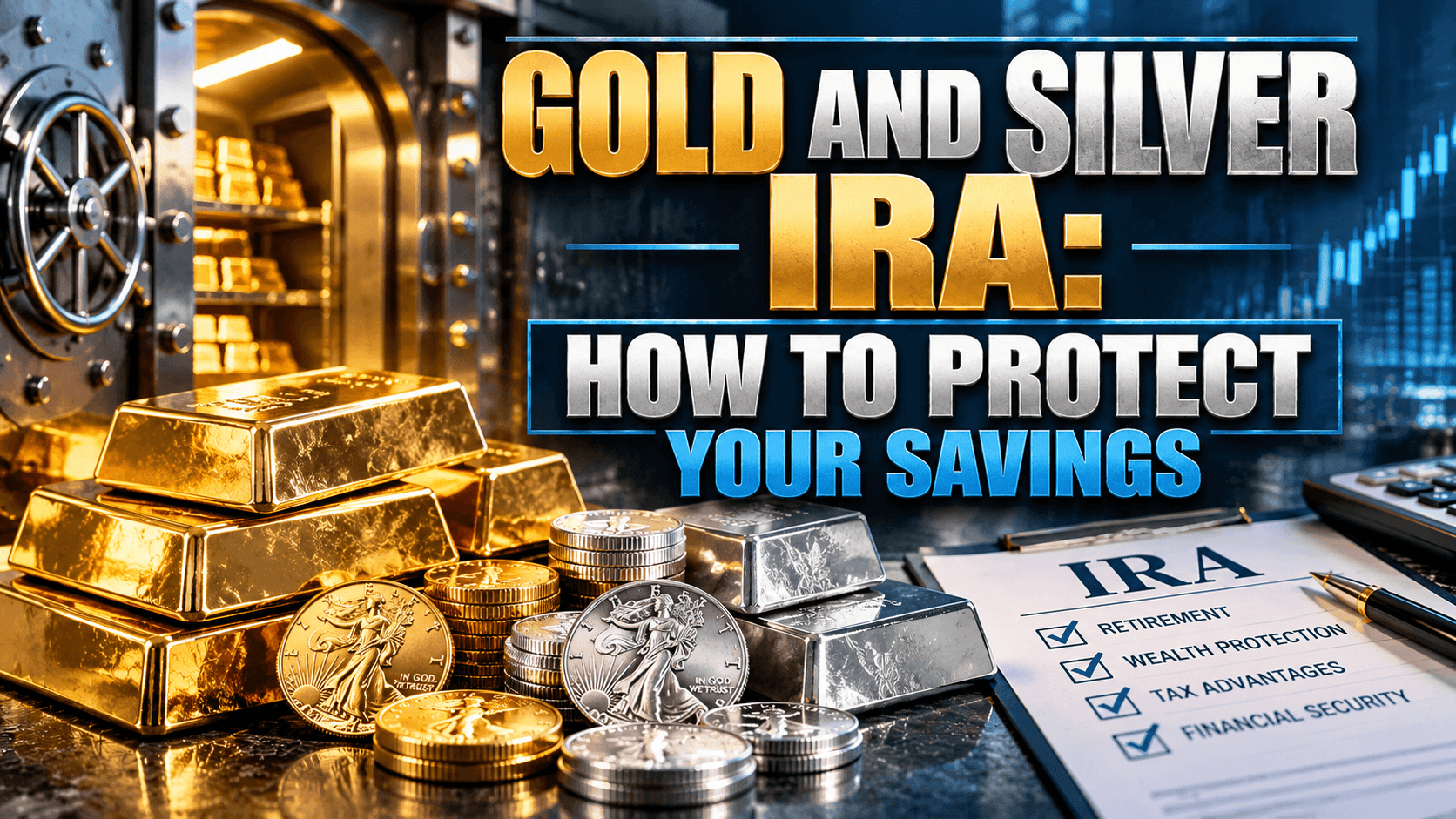
A gold and silver IRA is commonly called a Precious Metals IRA. It is a self-directed individual retirement account that holds qualifying physical gold, silver, and, in some cases, platinum or palladium.
The account can generally use the same tax structure as a traditional IRA or a Roth IRA.
With a traditional account, eligible contributions and rollovers may receive tax-deferred treatment. Taxes are generally due when you take distributions.
A Roth structure uses after-tax dollars, but qualified withdrawals may be tax-free. Your income, account type, contribution limits, and withdrawal plans all matter, so it is wise to speak with a qualified tax professional before making a decision.
The critical difference is custody. You cannot buy coins, put them in a home safe, and call them IRA assets. IRS rules require IRA metals to be held by an approved custodian and stored at an eligible depository.
This separation protects the tax-advantaged status of the account and provides documented custody, inventory controls, and insured storage.
 Request a FREE Gold & Silver Guide
Why Investors Consider a Gold and Silver IRA
 Gold has been used as a store of value across currencies, governments, and market cycles. It cannot be printed out of thin air, and its value is not tied to the future earnings of a corporation.
That does not mean its price moves in a straight line. It does mean gold has historically been viewed as a potential hedge when confidence in paper currencies or financial markets weakens.
Silver brings a different profile. It has monetary history, but it also has substantial industrial demand in areas such as electronics, solar technology, and manufacturing.
That can create a compelling long-term case, while also making silver more volatile than gold. Investors often use gold as the stability-focused core and silver as a smaller allocation with potentially greater price movement.
A Precious Metals IRA may fit investors who want part of their retirement savings held outside the conventional stock-and-bond system.
It can be especially relevant for people nearing retirement who are less comfortable seeing their entire nest egg exposed to a single market event. Still, diversification is not the same as a guarantee.
The appropriate allocation depends on your timeline, liquidity needs, income plan, risk tolerance, and overall financial position.
Which Metals Are Allowed in a Gold and Silver IRA?
Not every bar, round, or collectible coin is eligible. The IRS sets purity standards, and approved products must be acquired and handled through the IRA’s custodian process.
In general, gold must meet a minimum fineness of .995, while silver must meet .999 purity. Certain government-minted coins may qualify under specific exceptions.
Common eligible choices include:

 American Gold Eagles
- American Silver Eagles
- Canadian Maple Leafs
- And qualifying bars from recognized refiners

 American Gold Eagles
Collectible coins, rare numismatic products, jewelry, and many lower-purity coins generally do not belong in an IRA.
 The product choice affects more than eligibility. Premiums, liquidity, and resale demand can vary.
A widely recognized government-minted coin may carry a higher premium than a bar, while larger bars may reduce the premium per ounce but be less flexible if you eventually want to sell only part of your holdings.
A reputable Precious Metals IRA company should explain these trade-offs plainly rather than steering you toward high-markup products without a clear reason.
How a Gold and Silver IRA Rollover Works: Transfer vs Rollover
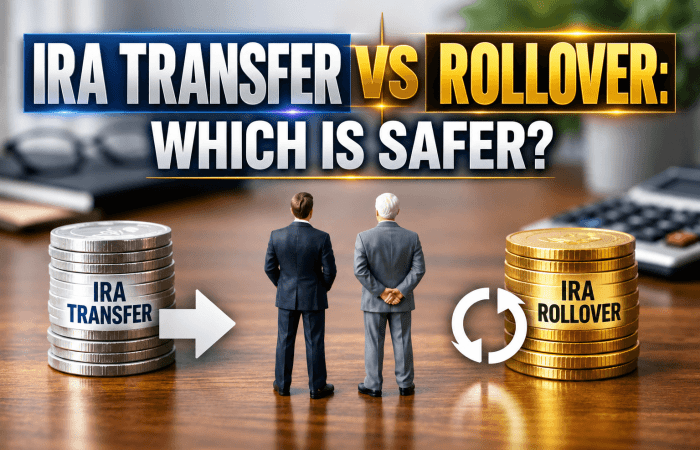
Most investors fund a new account with a rollover or transfer rather than a new annual contribution. The process is manageable when it is coordinated correctly, but terminology matters.
Gold and Silver IRA Transfer
A transfer typically moves funds directly from one IRA custodian to another. Because you do not take possession of the money, it is often the simplest route when moving an existing traditional IRA, Roth IRA, or other eligible IRA.
Gold and Silver IRA Rollover
A rollover usually applies when moving money from a former employer’s 401(k), 403(b), TSP, or similar workplace plan.
A direct rollover sends funds from the plan administrator to the new IRA custodian. This approach can help avoid unnecessary withholding and reduces the risk of missing important deadlines.
An indirect rollover is more complicated because the funds are first distributed to you. You generally must redeposit them within 60 days to avoid taxes and potential penalties, and mandatory withholding can create an additional funding issue.
For retirement savings, a direct custodian-to-custodian movement is often the cleaner path.
Before starting, confirm whether your current plan permits a rollover. If you are still employed, your 401(k) may limit in-service distributions.
Do not liquidate an account or request a check until you understand the plan rules and have coordinated the transaction with the receiving custodian.
Related:
- How to Start a Gold IRA in 3 Simple Steps
- How to Start a Silver IRA in 3 Simple Steps
- Best Gold IRA Companies for 2026 (Reviewed & Rated)
Costs and Risks to Understand Before You Buy Metals
 A Gold IRA and Silver IRA is not free to establish or maintain. Typical charges may include a one-time setup fee, annual custodian administration fee, depository storage fee, insurance-related costs, and bullion premiums.
Some companies like Augusta Precious Metals and Goldco waive certain fees for a limited period or for larger accounts, but investors should ask for the complete fee schedule in writing.
The price quoted for bullion is also important. Metals trade based on spot price, but physical products are sold at a premium.
When you sell, a dealer may buy back at spot price or another quoted level. That spread means precious metals are generally best viewed as a long-term allocation, not a short-term trade.
There are other practical risks. Gold and silver do not pay dividends or interest. Silver can experience sharper swings than gold.
Required minimum distributions may apply to traditional IRAs once you reach the applicable age, and selling metals to meet a distribution can be inconvenient during an unfavorable market period.
A larger retirement strategy should account for cash reserves and income-producing assets, not just bullion.
How to Choose a Legit Gold and Silver IRA Company
 The right Precious Metals IRA provider is not simply the one offering the loudest promotion. You are trusting a company with a retirement transaction that may represent decades of work.
Look for clear communication, transparent pricing, established custodial relationships, and a willingness to explain both benefits and limitations.
Use independent reputation sources as part of your research. BBB, Business Consumer Alliance, TrustLink, Trustpilot, and Ripoff Report can reveal patterns in customer feedback, although no rating source should be treated as the full story.
Pay attention to how a company handles complaints, whether its representatives pressure customers, and whether its fees and buyback policies are clearly disclosed.
A strong provider should be able to explain the difference between segregated and non-segregated storage, identify the depository where metals will be held, and provide a straightforward account-opening process.
It should also distinguish between an educational sales conversation and personalized investment or tax advice. Before you authorize a purchase, ask for written answers to these questions:
- What are the setup, annual custodial, storage, and insurance fees?
- Which coins or bars are being recommended, and what is the premium over spot price?
- Is storage segregated or non-segregated, and which depository holds the metals?
- What is the company’s buyback process, and how is the resale price determined?
- Which custodian will administer the IRA, and who is responsible for each step of the rollover?
Clear answers help you compare providers on substance, not marketing promises.
If you want to have more help choosing a Gold and Silver IRA company, you can check out these video reviews of two popular choices – Birch Gold Group and Goldco:
Physical Metals in an IRA Versus Metals You Hold Directly
An IRA is useful when you want tax-advantaged exposure using retirement funds. It also requires a custodian and approved storage, so you do not have immediate access to the metal.
Direct ownership is different: you buy bullion with non-retirement dollars and decide where and how to store it. You gain direct control, but you do not receive IRA tax treatment and take responsibility for security, insurance, and recordkeeping.
Many households use both approaches. Retirement metals can serve as a long-term allocation inside a structured account, while personally held bullion may provide a separate reserve for those who value direct possession.
The better choice depends on the purpose of the money and how much liquidity you need.
A gold and silver IRA is most useful when it is built deliberately – with eligible bullion, secure custody, transparent costs, and an allocation you can hold through changing headlines.
Take the time to request a FREE Gold & Silver Guide, compare established providers carefully, and make the decision from a position of knowledge rather than fear.
Related:
- Top 4 Most Secure Gold Depositories for Precious Metals IRA Investors
- Protect Your Metals: Top 10 Bullion Storage Questions to Ask
- How to Buy Silver Bullion Without Costly Mistakes: A Beginner’s Guide
Gold and Silver IRA: FAQ
What is a Gold and Silver IRA and how does it work?
A Gold and Silver IRA, also called a Precious Metals IRA, is a self-directed retirement account that holds qualifying physical gold, silver, and sometimes platinum or palladium. It can use the same tax structure as a traditional IRA or a Roth IRA, with tax-deferral on earnings or tax-free qualified withdrawals, depending on the account type.
The critical difference is custody: metals must be held by an approved custodian and stored at an eligible depository, not kept at home.
Which metals are allowed in a Gold and Silver IRA?
Gold must meet a minimum fineness of .995 and silver must meet .999 purity. Certain government-minted coins may qualify under specific exceptions, but not every bar, coin, or collectible is eligible.
Common choices include American Gold Eagles, American Silver Eagles, Canadian Maple Leafs, and qualifying bars from recognized refiners.
How does a Gold and Silver IRA rollover or transfer work?
Most investors fund a new account with a rollover or transfer. A transfer moves funds directly from one IRA custodian to another, while a rollover typically moves money from a former employer plan such as a 401(k).
A direct rollover is custodian-to-custodian and avoids withholding and deadlines, whereas an indirect rollover requires redepositing funds within 60 days and may involve mandatory withholding.
What costs and risks should I understand before buying metals for an IRA?
A Gold or Silver IRA involves setup fees, annual custodian administration fees, storage fees, insurance costs, and bullion premiums. Premiums reflect the spot price while physical products sell at a premium.
Metals do not pay dividends or interest, and selling may involve a spread. Distributions from traditional IRAs may trigger taxes, and selling to meet distributions can be inconvenient in a down market.
How should I choose a legitimate Gold and Silver IRA company?
Look for clear communication, transparent pricing, established custodial relationships, and a willingness to explain benefits and limitations. Use independent reputation sources, and ask for written answers to key questions about fees, what is recommended to buy, storage arrangements, buyback policies, and who administers the custodian and rollover process. Or, check out our Best Gold IRA Companies page.
Request a FREE Gold & Silver Guide